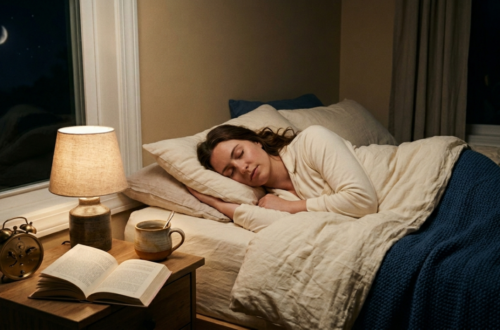

We’ve all been there. You’ve had a day that felt forty-eight hours long. Your body is heavy, your eyes are burning, and all you want to do is sink into your mattress and disappear into a dreamless sleep. But the moment your head hits the pillow? Your brain decides it’s the perfect time to host a marathon.
Disclaimer: I am not a medical professional. This information is for educational purposes only and does not replace professional medical advice. If you have chronic insomnia, anxiety, or other health concerns, please consult a qualified healthcare professional.
Suddenly, you’re replaying a conversation from three years ago. You’re planning your grocery list for next Tuesday. You’re worrying about that email you forgot to send. You look at the clock: 11:45 PM. Then 1:15 AM.
If this sounds like your nightly reality, you aren’t alone. Modern life is practically designed to keep us awake. Between the blue light from our phones and the constant “always-on” culture, our brains have forgotten how to switch off. The good news? You don’t need expensive sleeping pills or a high-tech “smart bed” to fix this.
True, restorative sleep often comes from small, intentional habits and simple home remedies that tell your nervous system: “It’s okay. You are safe. You can rest now.”
In this guide, I’m sharing my favorite DIY nighttime rituals that you can start tonight to reclaim your rest.
1. The Power of the “Warm Sip”: Calming Nighttime Drinks
There is something deeply psychological about holding a warm mug in your hands. It signals to your body that the “hunting and gathering” of the day is over. But what you put in that mug matters.
The Herbal Heavyweights: Chamomile and Peppermint
Chamomile isn’t just an “old wives’ tale.”
- The DIY Ritual: Go to your kitchen and pick out your favorite, heaviest mug. Boil fresh water, but don’t pour it over the tea bag immediately—let it sit for a minute so it doesn’t “scorch” the herbs. Let it steep for a full five to seven minutes.
- The Mindful Moment: Don’t drink this while scrolling. Sit by a window or in a quiet chair. Sip it slowly, 30 minutes before you intend to close your eyes.
The Traditional Classic: Warm Milk and Honey
If tea isn’t your thing, warm milk is a powerhouse for sleep. Milk contains tryptophan and magnesium, which are precursors to melatonin (the sleep hormone). Adding a teaspoon of honey doesn’t just make it taste better; it helps the tryptophan cross the blood-brain barrier more effectively.
2. Breaking the Digital Chain: The Screen-Free Wind-Down
This is the hardest remedy for most of us, but it’s the most effective. Your phone is a “dopamine machine.” Every scroll, every notification, and even every “like” sends a spark of electricity to your brain, telling it to stay alert.
The Blue Light Problem
Our brains are wired to wake up when they see blue light (like sunlight). Your phone screen mimics this light, tricking your brain into thinking it’s mid-morning even when it’s midnight.
How to Create a “Digital Sunset”
You don’t have to throw your phone away. Just set a “Digital Sunset” 30 to 60 minutes before bed.
- The “Brain Dump” Technique: Instead of scrolling, grab a physical notebook. Write down everything you need to do tomorrow. Once it’s on paper, your brain stops “looping” the information because it knows the data is safely stored elsewhere.
- Read for Pleasure: Not a business book or a self-help guide—read a story. Fiction allows your brain to enter a “flow state” similar to meditation.
3. The 4-4-4 Method: Breathing Your Way to Calm
When we are stressed, our breathing becomes shallow and fast. This keeps our body in a “Fight or Flight” state. To sleep, we need to enter the “Rest and Digest” state. You can manually flip this switch using your breath.
The Step-by-Step 4-4-4 Box Breathing:
- Inhale: Breathe in through your nose for a slow count of four. Feel your belly expand, not just your chest.
- Hold: Keep that air in your lungs for a calm count of four.
- Exhale: Release the breath through your mouth for four seconds, imagining the tension leaving your shoulders.
- Repeat: Do this four times.
By focusing on the numbers, you give your “racing mind” a job to do. It can’t worry about work if it’s busy counting to four.
4. Water Therapy: Transitioning into “Rest Mode.”
Water is one of the most underrated sleep aids. Scientists have found that a warm bath or shower before bed helps because of the temperature drop that follows. Your body temperature naturally dips as you fall asleep; by warming up in the shower and then stepping out into a cool room, you mimic that natural dip, telling your brain it’s sleep time.
The DIY Epsom Salt Soak
If you have a bathtub, use Epsom salts. They are rich in magnesium, which can be absorbed through the skin to help relax tight muscles.
- The “Quick Fix” Foot Soak: Don’t have time for a full bath? Just soak your feet in a basin of warm water with a few drops of lavender oil for 15 minutes. Our feet hold a lot of tension, and warming them up draws blood flow away from a “hot” overactive brain and down toward the lower body.
5. Aromatherapy: The Scent of Sleep
Our sense of smell is the only sense with a direct link to the emotional center of the brain (the limbic system). This is why certain smells can instantly make us feel safe or relaxed.
DIY Lavender Pillow Spray
Lavender has been shown in clinical studies to slow down the heart rate and lower blood pressure.
- Make it at home:
- 1 cup of distilled water.
- 10–12 drops of high-quality Lavender essential oil.
- A small spray bottle.
- The Routine: Lightly mist your pillow and linens. As you lie down and breathe in the scent, your brain will begin to associate that specific smell with the act of falling asleep. Over time, just smelling lavender will make you feel drowsy automatically.
6. Why Consistency is Your Secret Weapon
Here is the truth: A DIY remedy might work tonight, but it will work wonders in two weeks. Sleep isn’t something you can force; it’s something you have to “invite” in.
When you do the same things every night—the tea, the breathing, the spray—you are building a Pavlovian response. You are training your body to recognize the “Sleep Runway.”
The “One at a Time” Rule
Don’t try to change your entire life tonight. Pick one remedy from this list. Maybe tonight is just the chamomile tea. Do that for three nights. Then, add the 4-4-4 breathing.
7. Troubleshooting: What if I Still Can’t Sleep?
If you’ve tried the remedies and you’re still staring at the ceiling, don’t stay in bed. If you stay in bed while frustrated, your brain starts to associate your bed with “anxiety.”
- The 20-Minute Rule: If you aren’t asleep in 20 minutes, get out of bed. Go to a different room with dim lighting. Do something boring (like folding laundry or looking at a magazine) until you feel a “wave” of tiredness. Only then, go back to bed.
Better sleep doesn’t happen overnight. Start small and stay consistent
Stress isn’t going to vanish from the world, and your to-do list will always be there tomorrow. But you deserve to face that list with a rested mind and a recovered body. By turning your evening into a sanctuary of simple, natural rituals, you aren’t just “sleeping”—you’re healing.
Which of these are you going to try tonight? Whether it’s the warm milk or the pillow spray, stay consistent and be patient with yourself. Sweet dreams!
Disclaimer: I am not a medical professional. This information is for educational purposes only and does not replace professional medical advice. If you have chronic insomnia, anxiety, or other health concerns, please consult a qualified healthcare professional.
Last updated: March 2026
Written by KGlow Writer
I’m not a medical professional. I research wellness topics, test home remedies, and share what I learn. This information is for educational purposes only. If you have chronic insomnia, anxiety, or other health concerns, please consult a qualified healthcare professional.
Have a question? Contact me through my website.
Leave a Reply (your existing comment form stays here)