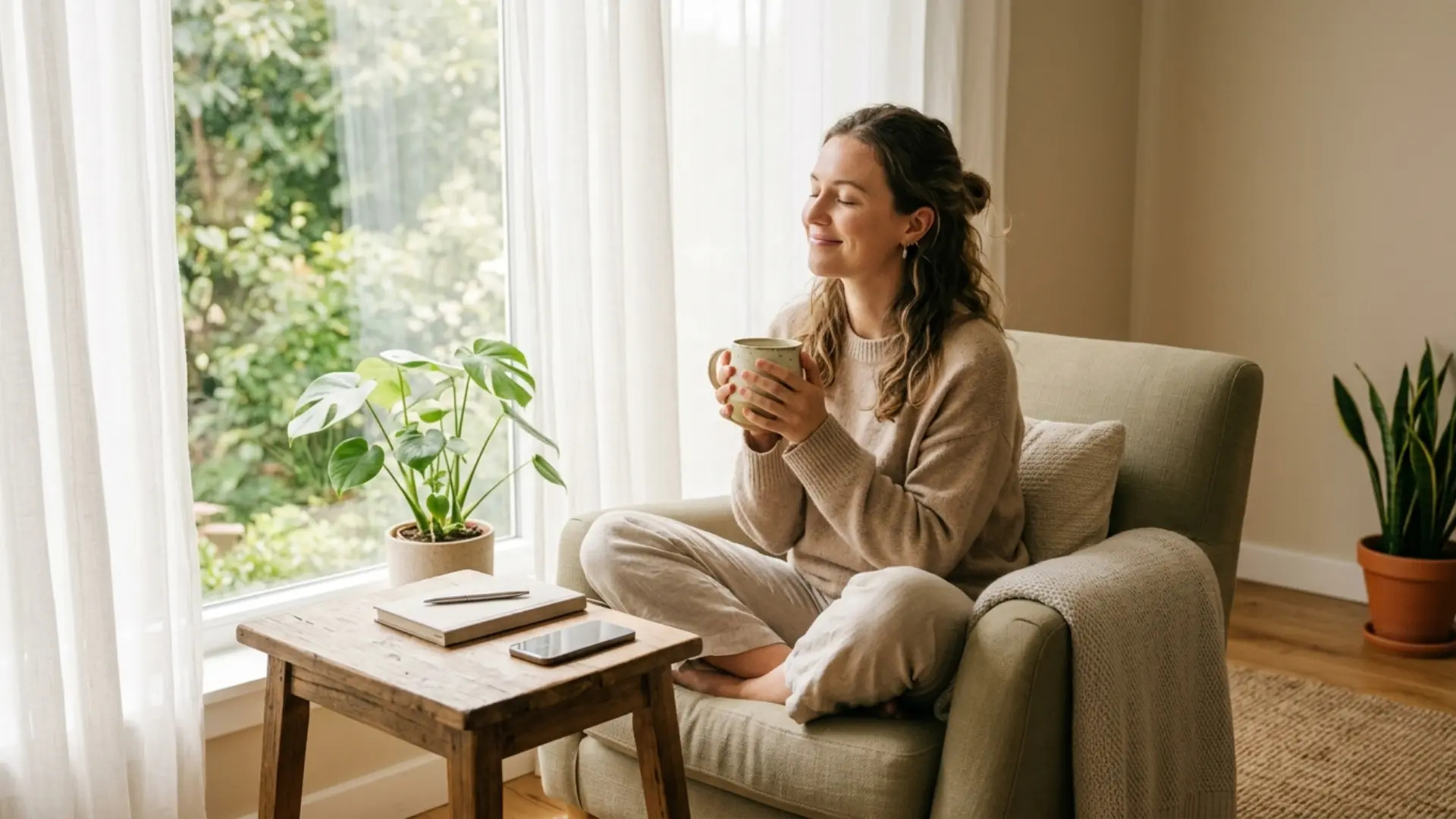
A photorealistic, wide 16:9 blog header image featuring a young woman sitting cross-legged in a cozy sage green armchair by a bright, sunny window with soft white curtains. She has her eyes closed with a peaceful smile, holding a warm ceramic mug with both hands. On a rustic wooden side table next to her, a notebook, pen, and a smartphone placed face-down suggest a moment of digital detox. The room is decorated in calming warm beige tones with green houseplants, creating a serene and minimalist atmosphere.
Lifestyle & Wellness

Natural Stress Relief: 10 Simple Ways to Calm Your Mind

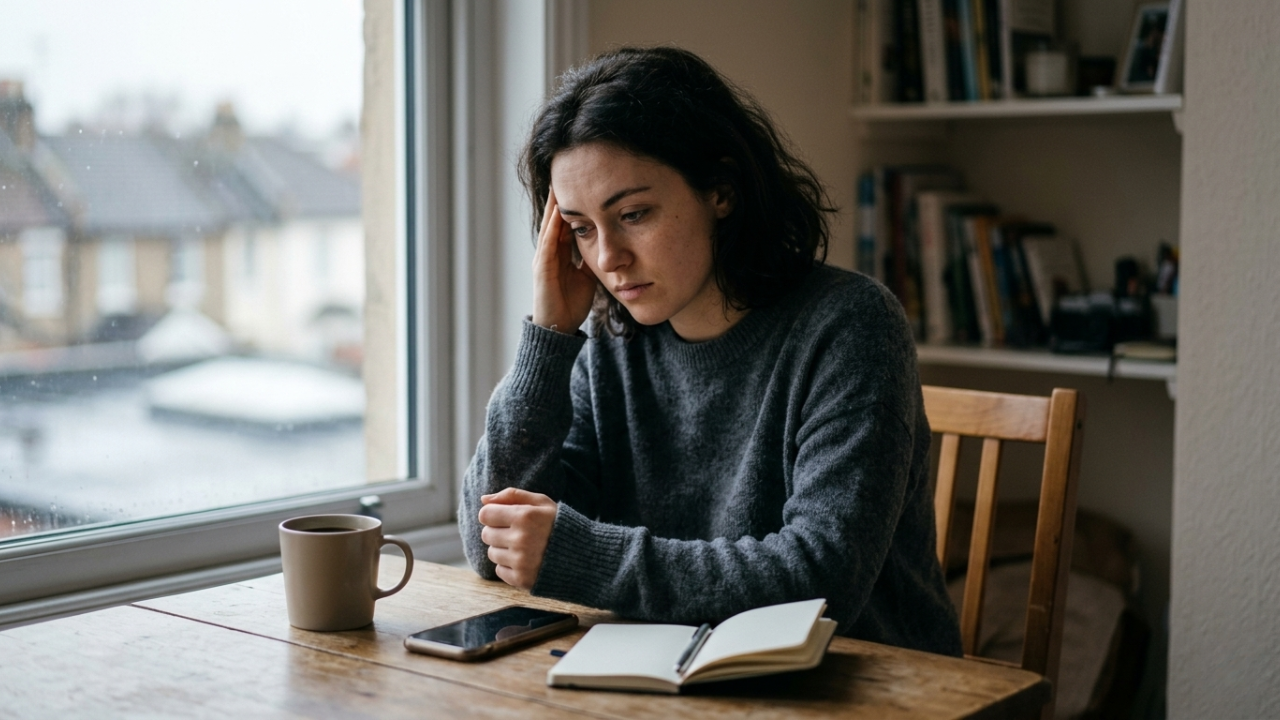
If you’re searching for natural stress relief, you’re not alone. You are breathing properly, and, more importantly, your body is not stuck in “fight or flight” mode. Who does not want to manage stress better, but nowadays life is so busy, and anxiety becomes your plus-one, and that leads to tension headaches, poor sleep, and feeling overwhelmed. Here I am going to share what stress really means and how you can lower it naturally, and you are going to feel calmer inside and out because you know “a peaceful mind creates a peaceful life”.

The good news? Natural stress relief is possible without medication.

Disclaimer: I am not a doctor or therapist. This information is for educational purposes only and does not replace professional medical advice. If you have chronic stress or anxiety, please consult a qualified healthcare professional.

What is Stress, Really?

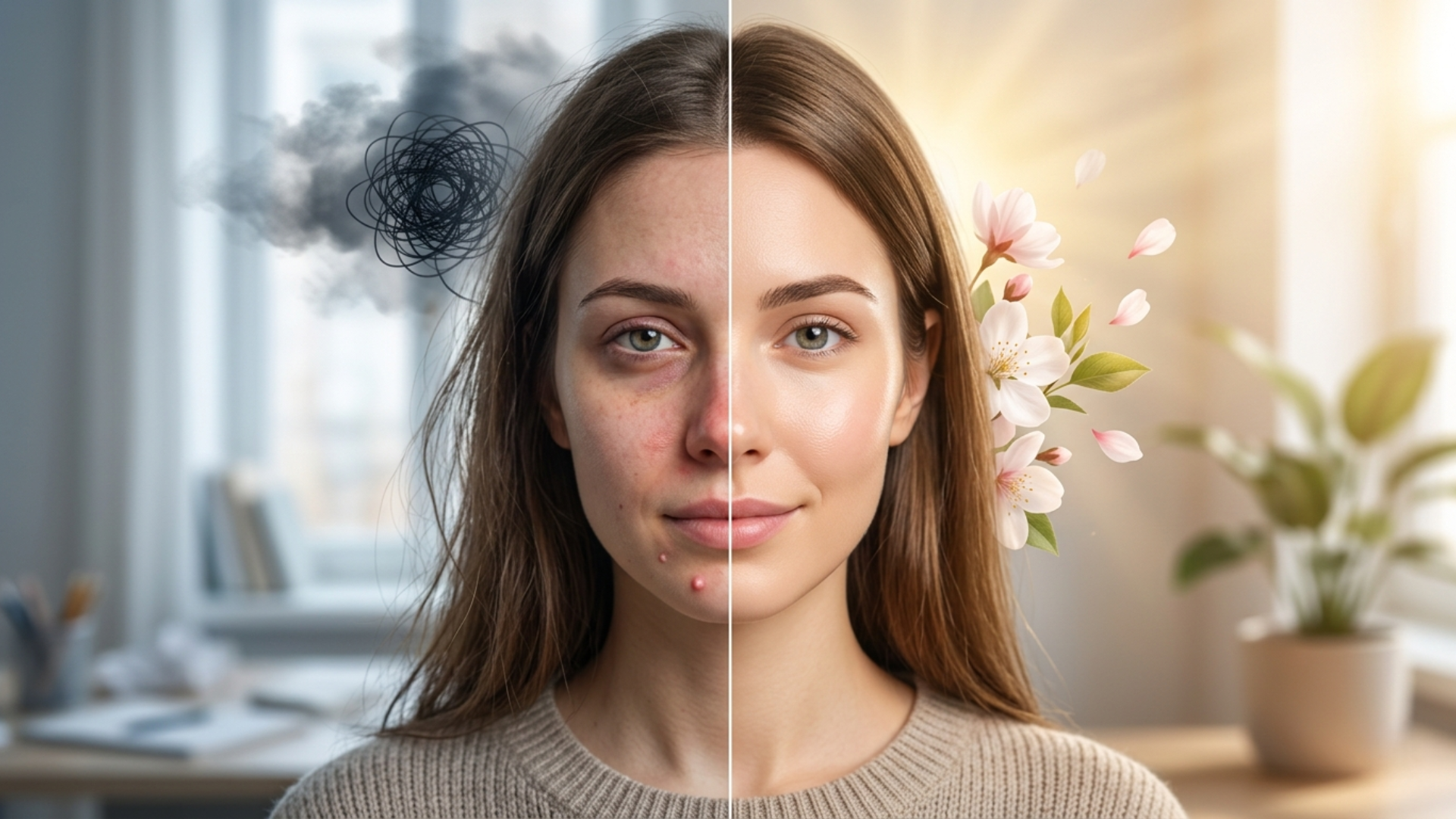
Well, if your mind is calm, it means your body is going to function better. Naturally, having low stress means that you are balanced inside and out. A relaxed state only appears when your breathing is deep; it also reveals mental clarity, and you will feel lighter naturally.

What are the main Characteristics of a low-stress mind?

  • You will feel fewer racing thoughts or panic moments
  • You will notice that your sleep is deeper, neither too little nor too restless
  • You will notice a more patient attitude
  • You will notice less tension in your shoulders and jaw

“A gentle reminder, if you have low stress, it does not mean you have zero problems. If you still have occasional worries, tough days, or responsibilities, you are still human, and you are doing perfectly fine.”

Now, what’s the science behind Stress?

Based on what I’ve researched, two key factors are cortisol and your nervous system, which I am going to share with you about stress science. The first one is Cortisol Levels, and the other is Nervous System Regulation. Now, let’s dive deeply into how?

Cortisol Levels: Cortisol is your body’s main stress hormone. In short bursts, it helps you stay alert. However, when you stay stressed for too long, due to work pressure, lack of rest, financial worries, or relationship issues, cortisol stays high. This will not only affect your mood, but you will also see that it’s going to affect you physically, and you will notice brain fog, tiredness, and the calm version of you will be nowhere to be noticed.

Nervous System Regulation: Your nervous system has two main modes: “fight or flight” (stressed) and “rest and digest” (calm). If you practice deep breathing or even a short walk, it will activate the rest-and-digest mode, which will help your body relax like a slow river, and you will notice a sense of ease in your mind. Some research suggests that chronic stress keeps the nervous system stuck in fight-or-flight mode, which contributes to burnout over time.

 Natural Stress Relief Techniques You Can Use Today

If you need natural stress relief, there are many ways. I will try to cover all, but you will only get the result if you follow these consistently.

  • Deep breathing: It will help you lower your heart rate. If you aim to do 4-7-8 breathing (inhale 4 seconds, hold 7, exhale 8), you are doing a very good favour to your nervous system; as a result, you will see a reduction in tension and anxiety.
  • Regular movement: If you intend to have a sedentary lifestyle, your body will hold onto stress. If you practice walking, yoga, or gentle stretching, which helps you release built-up tension, you can see the naturally calm mind appear.
  • Digital boundaries: If you manage to have any kind of screen break, social media limit, or notification detox, you will notice improvement in your mental clarity, which will help your brain rest, and you will feel the freshness in your mind.
  • Quality sleep hygiene: if you intend to incorporate a consistent bedtime, which will promote natural stress recovery. No screens 1 hour before bed, a dark, cool room, and the same wake-up time are the best sleep habits.
  • Mindful journaling: Writing down your worries for 5–10 minutes gets them out of your head and onto paper. This lowers the mental load significantly.

What are Natural Stress Relief tips? These small actions add up to real natural stress relief

Having a daily wind-down routine is also one of the factors that will help you achieve your calm-state goal if you have lost it, but you have to promise yourself that you will do this consistently; otherwise, you won’t get the stress relief you are looking for. Here I am going to share a few steps that you can follow and achieve the desired calmness you are looking for.

Breathe:
Breathing will help you reset your nervous system in less than 2 minutes. While choosing a breathing technique, you need to look for one that is simple for you. You can use box breathing (inhale 4, hold 4, exhale 4, hold 4). But always look for the best technique that will suit your current stress level for the best result.

The best way to practice breathing is in the morning when you wake up, during a work break, or right before bed. Always try to sit comfortably instead of lying down, and after that, don’t forget to notice how your body feels.

Move:
After breathing, you can move your body gently with a 10-minute walk or light stretching. It will not only release physical tension, but it will also lower cortisol, and that will encourage a relaxed state.

Disconnect:
After moving, the next very important step is to disconnect from screens for 30 minutes. You can also turn on “Do Not Disturb” mode, which will help your mind reset.

Sleep:
Don’t forget to create a wind-down ritual. Dim lights, no phone in bed, and a consistent time. These sleep habits will protect your stress levels and will give you a calm mind. For better results, try to avoid caffeine after 2 PM; this will ensure deep rest.

Write:
Get a cheap notebook. Write down 3 things that went well today. Then write down 1 thing that is worrying you. Close the book. That worry stays on the page, not in your head.

Talk:
Call or text one person you trust. You don’t even have to talk about stress. Just connecting lowers cortisol naturally.

Laugh:
Watch 5 minutes of something funny. Laughter lowers stress hormones and releases endorphins. It works immediately.

Nature:
Step outside for 5 minutes. Look at a tree, the sky, or even a houseplant. Natural light and green space calm your nervous system faster than anything else.

Stretch:
Your shoulders, neck, and jaw hold the most stress. Slowly roll your shoulders, drop your ear to each shoulder, and gently massage your jaw. You will feel the difference in 60 seconds.

Routine:
Your brain craves predictability. Having a simple morning and evening routine (even a 10-minute one) tells your nervous system “you are safe”. That alone lowers baseline stress.

Let’s wrap it up!

A calm lifestyle, simple techniques, and consistency are the best combination for stress management. Make sure to breathe deeply, as it is the most important step, and don’t forget to move your body. Try to find the best routine that will balance your nervous system. And more importantly, don’t forget to manage your screen time and have good sleep habits, and quality connection with people is also the main key to a calm mind. By following a well-maintained routine, anyone can achieve natural stress relief.

Disclaimer: I am not a doctor or therapist. This information is for educational purposes only and does not replace professional medical advice. If you have persistent stress or anxiety, please consult a qualified healthcare professional.

Last updated: March 2026

Written by KGlow Writer

I’m not a therapist or medical professional. I research wellness, test simple techniques at home, and share what I learn. This information is for educational purposes only. Always listen to your body and consult a doctor for medical concerns.

Have a question? Contact me through my website.

Leave a Reply (your existing comment form stays here)

Leave a Reply

Your email address will not be published. Required fields are marked *