
What Is Your Skin Type? Complete Beginner-Friendly Explanation
No one dislikes healthy or attractive skin. Everyone chooses a lot of products and remedies, but not everyone gets the same results. The main reason is that not every product, tip, or remedy works for everyone because everyone’s skin type is different. Basically, there are 4 skin types: normal, oily, dry, and combination. If you don’t identify your skin type, how will you get a glassy face look? If you choose the wrong products, it can cause skin irritation, breakouts, or dryness. We will guide you step by step on how to identify your skin type and which products are safe for you, so that skin problems do not occur.
What does skin type meaning?
Skin type is a basic skincare concept that tells how your skin behaves naturally. You may have noticed that some products give the best results to some people, while the same products cause acne or irritation for others. The reason is that every skin type is unique. Skin type basically tells whether your skin is oily, dry, normal, or combination. By identifying your skin, you can easily select skincare products, tips, and remedies that are best for you and also provide results. For beginners, recognizing this step is the first step toward healthy skin.
Main Types of Skin
We will provide complete guidance on how you can identify your skin type, which is best for your skincare. Skin is mostly of 4 types: dry, oily, normal, and combination. Let’s get started.
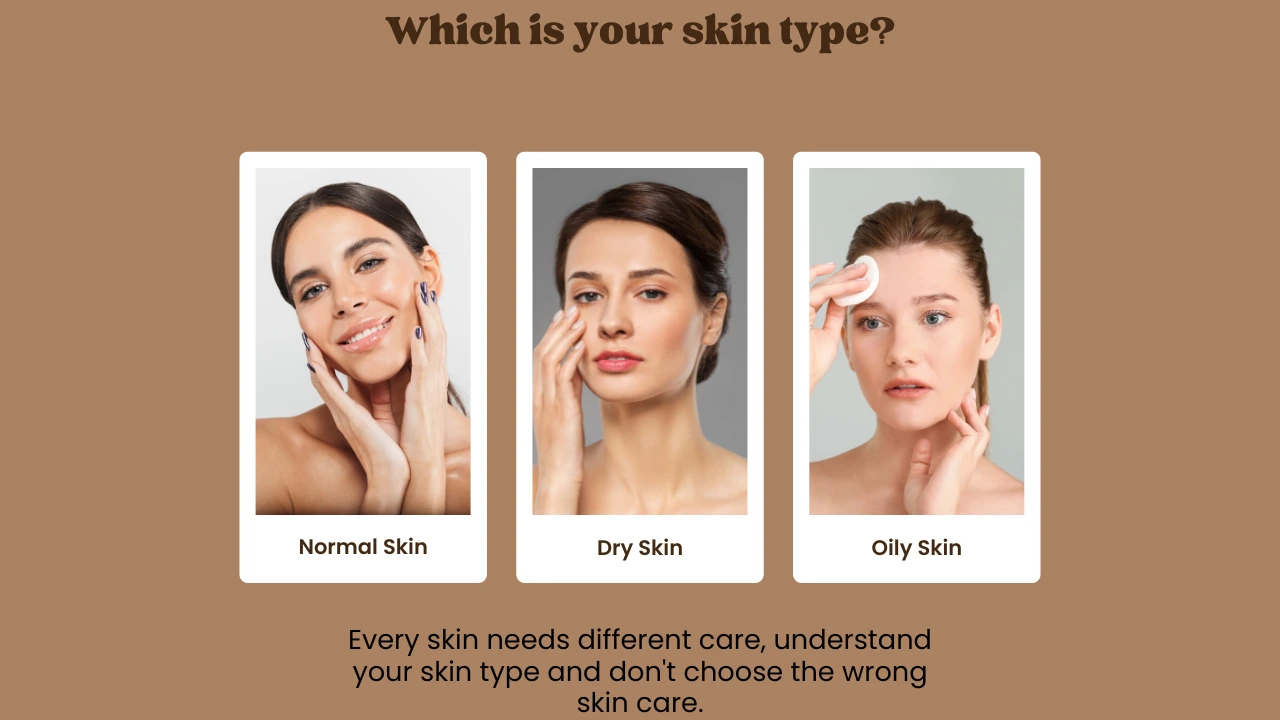
Normal Skin
Normal Skin Identification:
If your skin is balanced and healthy, meaning it is neither too oily nor too dry, it is considered normal. A simple way to identify it is: your face naturally glows, and pores are small and not visible. Occasionally, dryness or oiliness may occur, but the skin remains soft and smooth. There is no redness, irritation, or acne problems; this is normal skin.
Normal Skin Product Selection:
Product selection for normal skin should be careful to keep your skin healthy and naturally glowing, avoiding harsh chemicals. The cleanser you choose should be mild and soap-free. The moisturizer should be lightweight and non-greasy. The use of serums or treatments is optional, but if you want extra glow or hydration, you can use them. Sunscreen should be used daily.
A simple and balanced routine is best for normal skin, which keeps it neither over-dry nor over-oily, maintaining natural health and softness.
Oily Skin
Oily Skin Identification:
If your skin produces extra oil/sebum, meaning areas of your face look very shiny, especially the forehead, nose, and chin. In oily skin, pores are large and visible, and people with oily skin often face problems like acne, blackheads, and pimples. The skin is thick and greasy, which makes makeup and moisturizer slide off. Even after washing, the face may still feel oily.
Oily Skin Product Selection:
Before selecting products for oily skin, confirm that they are oil-free and lightweight. Prefer gel-based or water-based moisturizers that provide hydration and control shine. Sunscreen should be oil-free and non-comedogenic. Choose a cleanser that removes excess oil without causing dryness. Weekly exfoliation helps reduce clogged pores and blackheads, but avoid harsh scrubs. Many mattifying products and oil-control serums are available in the market; include them in your routine to keep skin healthy and prevent excessive oil production.
Dry Skin
Dry Skin Identification:
If your skin naturally lacks moisture or appears low in natural oils and glow, it is considered dry. After washing, the skin feels tight and rough. Sometimes flakiness, scaling, or redness may occur. Pores are small and barely visible. Makeup does not apply evenly, and the skin looks dull.
Dry Skin Product Selection:
People with dry skin should select products that provide extra hydration and help lock in moisture. When choosing a cleanser, make sure it is cream-based so the skin does not feel tight or dry. Moisturizers should be rich and emollient to keep the skin soft and smooth. Sunscreen should be non-greasy and preferably hydrating; use it daily. Weekly exfoliation should be light and gentle to avoid damaging the skin barrier. Overall, the routine should be simple and nourishing so the skin retains moisture and stays healthy.
Combination skin guide
Combination Skin Identification:
Often, different areas of the face behave differently. The forehead, nose, and chin appear oily, while the cheeks are dry or tight. People with these characteristics have combination skin. In terms of pores, oily areas have large and visible pores, while dry areas have small pores. To identify it, observe: the T-zone may have shine and occasional breakouts, while the cheeks may feel tight or flaky.
Combination Skin Product Selection:
For combination skin, balanced and targeted products work best. Prefer a gentle cleanser, foaming or gel-based, that removes excess oil without stripping dry areas. Moisturizer should be lightweight and non-greasy, with a slightly richer moisturizer for dry areas if needed. Apply sunscreen daily; a non-comedogenic and oil-free formula is ideal. Weekly exfoliation should be light and gentle to benefit both oily and dry areas. Serums are optional, targeted for hydration or oil control. Overall, the routine should be flexible and balanced so that different areas of the face feel healthy and comfortable.
Final Thoughts
No one dislikes healthy or attractive skin. Everyone chooses a lot of products and remedies, but not everyone gets the same results. The main reason is that not every product, tip, or remedy works for everyone because everyone’s skin type is different. There are 4 skin types: normal, oily, dry, and combination. If you don’t identify your skin type, you cannot get a glassy face look. Choosing the wrong products can cause skin irritation, breakouts, or dryness.
By identifying your skin type, you can easily select skincare products, tips, and remedies that are best for you and provide results. For normal, oily, dry, and combination skin, following the right cleanser, moisturizer, sunscreen, and routine ensures that your skin stays healthy, soft, balanced, and naturally glowing. Recognizing your skin type is the first step toward healthy skin.





10 Comments on “What Is Your Skin Type? Complete Beginner-Friendly Explanation”