Food supports normal body function, including skin, but no menu guarantees clear, wrinkle-free or glowing skin. Acne and dryness are not proof that you eat badly. This guide replaces the earlier “gut toxins,” fixed food doses, sun-protection claims and unsupported acne statistic.
What diet can reasonably offer
Adequate energy, protein, fats, vitamins and minerals matter for health. A varied eating pattern is more useful than chasing one superfood. Genetics, hormones, skin conditions, medicines and environment also affect appearance. Skincare and medical treatment may still be needed.
Build meals from foods you can access
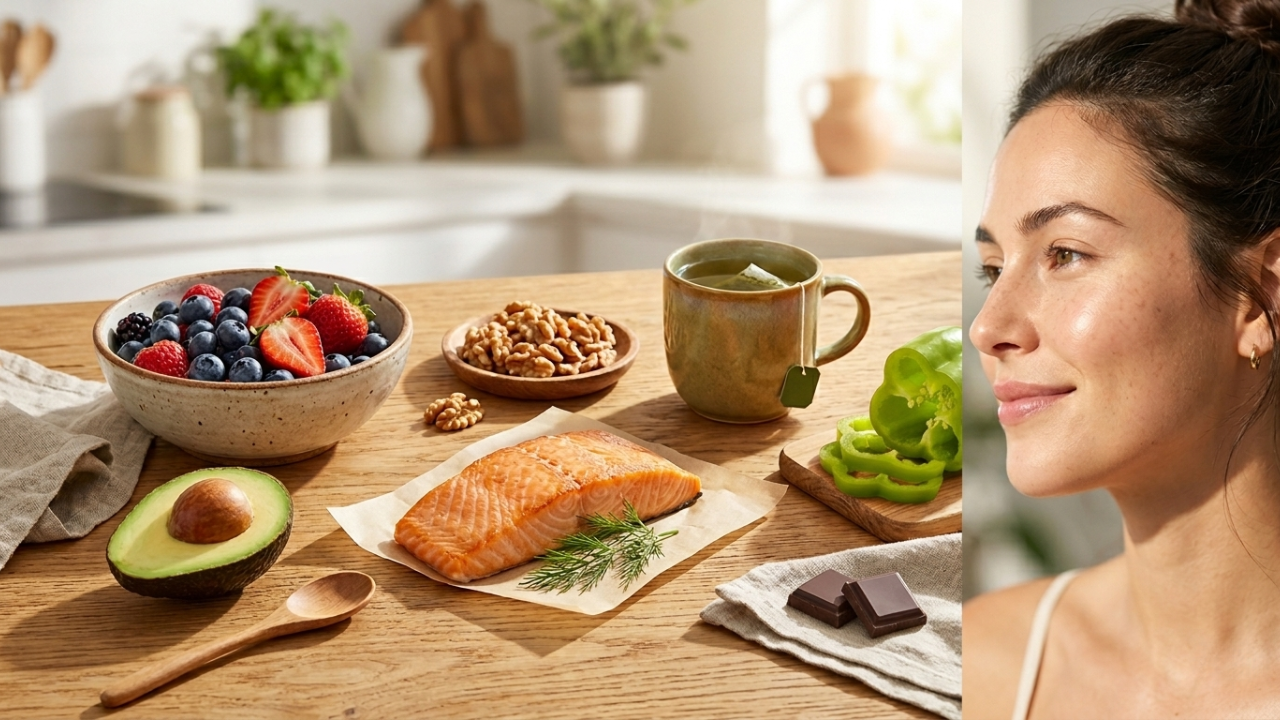
Consider a starchy base, a protein food and fruit or vegetables across your meals. Examples include lentils with rice and vegetables; eggs with wholegrain toast and fruit; or fish with potatoes and greens. These are meal ideas, not prescriptions for skin results. Adapt them to appetite, culture, allergies and budget.
Frozen vegetables, beans and seasonal fruit can be useful alternatives to costly berries or supplements. You do not need daily avocado, bone broth, dark chocolate or green tea for healthy skin. Those foods should not be sold as a beauty requirement.
Acne and food: association is not certainty
Research suggests that dietary patterns with a lower glycemic load may help some people with acne. Some studies link cow’s milk with acne, but that does not mean all dairy causes acne in everyone. Diet alone is not a reliable acne treatment, and broad food exclusions can make eating unnecessarily restrictive.
If you suspect a pattern, record food and symptoms without changing several things at once, and discuss it with a clinician or registered dietitian. Do not diagnose a food trigger from where acne appears on your face. Continue appropriate acne care.
Foods are not sunscreen
The earlier descriptions of fish, nuts, sweet potatoes, tea and chocolate as sun protection have been removed. Eating antioxidants does not replace shade, clothing or labeled sunscreen. A food study cannot be translated into an SPF rating or permission to spend longer in the sun.
Avoid “bad food” diagnosis
Dryness, dark circles, slow healing and breakouts have many possible causes. These signs cannot identify an unhealthy gut or nutrient deficiency on their own. Seek assessment for persistent or concerning changes rather than treating your face as a dietary test.
A balanced diet can include enjoyable foods. The earlier table suggesting that individual foods directly clog pores, destroy collagen or inevitably trigger acne oversimplified the evidence. Focus on your overall eating pattern instead of guilt after one meal.
Supplements and special diets
Do not start high-dose vitamins, collagen products or restrictive diets solely for a glow claim. Medical conditions, pregnancy and dietary restrictions can change nutritional needs. Ask a qualified professional if you need individualized advice.
A practical first step
Choose one affordable improvement that fits your current meals, such as adding a vegetable or including a protein food. Keep sun protection and a tolerated skincare routine steady. Judge the change by whether it supports sustainable eating, not by a promise of brighter skin within a week.
Sources
NHS: Balanced eating
AAD: Diet and acne evidence
Written by KGlow Writer. I am not a dermatologist or medical professional. This article is for general education and does not replace individualized care. Last reviewed: October 9, 2026.