Want to understand how nutrition impacts skin health? Start by looking at your plate, not your bathroom cabinet.
You spend money on serums, moisturizers, and face masks. You follow a perfect skincare routine morning and night. But your skin still looks dull, tired, or broken out. Here is the truth that no product label will tell you: glowing skin starts on your plate, not in your bathroom cabinet. Your skin is the largest organ in your body, and like every other organ, it needs the right nutrients to function well. You cannot out-skincare a bad diet. Here I am going to share exactly how nutrition impacts your skin health and which foods actually give you that natural glow.
Understanding how nutrition impacts skin health is the missing piece in most skincare routines. This complete guide explains exactly how nutrition impacts skin health and what to eat for a natural glow.
Disclaimer: I am not a doctor, dermatologist, or nutritionist. This information is for educational purposes only and does not replace professional medical advice. If you have persistent skin concerns or dietary restrictions, please consult a qualified healthcare professional.
What is the Skin-Gut Connection? (How Nutrition Impacts Skin Health)
Well, your skin and your gut are deeply connected. The gut is where your body breaks down food, absorbs nutrients, and manages inflammation. When your gut is healthy, nutrients reach your skin, inflammation is low, and your skin glows. When your gut is unhealthy, toxins and inflammatory compounds enter your bloodstream, and your skin shows the damage. Naturally, having glowing skin means having a healthy gut. You cannot have one without the other.

What are the main characteristics of a skin-healthy diet?
- Your skin looks bright and even-toned, not dull or gray
- Breakouts are rare and heal quickly
- Your skin holds moisture well without feeling greasy
- Fine lines look softer, not deep and exaggerated
- Your skin recovers quickly from sun exposure or minor irritation
- You have a natural “lit from within” appearance
“A gentle reminder, if you have been struggling with your skin despite trying every product, that does not mean you are doing skincare wrong. It might mean your skin is asking for different fuel. Changing what you eat is harder than changing your moisturizer, but the results last much longer.”
How Nutrition Impacts Skin Health: 4 Scientific Factors
Based on what I’ve researched, four key factors are inflammation, oxidative stress, collagen production, and the skin barrier, which I am going to share with you about nutrition and skin science. The first one is Inflammation, the second is Oxidative Stress, the third is Collagen Production, and the fourth is Skin Barrier Function. Now, let’s dive deeply into how?
Inflammation: Inflammation is your body’s immune response to injury or irritants. A little inflammation is good. Chronic inflammation is bad. When you eat foods that spike your blood sugar, like white bread, soda, and candy, your body releases inflammatory chemicals. These chemicals travel to your skin and trigger breakouts, redness, and premature aging. Some research suggests that high-glycemic diets can increase acne by over 30 percent. According to Healthline,Healthline high-glycemic diets are directly linked to increased acne and skin inflammation.
Oxidative Stress: Oxidative stress happens when unstable molecules called free radicals damage your skin cells. Free radicals come from UV rays, pollution, and also from the food you eat. Fried foods, processed meats, and alcohol all create free radicals. Your body fights free radicals with antioxidants. When you eat antioxidant-rich foods like berries and leafy greens, you give your body the weapons it needs to protect your skin from damage.
Collagen Production: Collagen is the protein that keeps your skin firm, bouncy, and wrinkle-free. Your body makes collagen naturally, but production slows down after age 25. Certain nutrients help your body make collagen: vitamin C, amino acids (from protein), copper, and zinc. Without these nutrients, your skin becomes thin, fragile, and wrinkled. Eating collagen-rich foods like bone broth gives your body the building blocks it needs. The American Academy of Dermatologyconfirms that vitamin C is essential for collagen synthesis and skin repair.
Skin Barrier Function: Your skin barrier is the outer layer that keeps moisture in and irritants out. This barrier is made of fats called lipids. When you eat healthy fats like omega-3s (from fish, walnuts, flaxseeds), you give your skin the raw materials to build a strong barrier. A strong barrier means hydrated, smooth, glowing skin. A weak barrier means dry, sensitive, dull skin. If your skin barrier is already damaged, read our guide on How to Build a Skincare Routine for Dry Skin.

What are a few signs that my diet is affecting my skin?
If your diet is hurting your skin, your face will tell you. Here is what to look for.
Frequent breakouts: Especially on the jawline and lower face, which are linked to hormonal and inflammatory triggers from food
Dull, tired-looking skin: Your skin lacks radiance even when you are well-rested
Dry, flaky patches: Your skin feels tight and looks rough no matter how much moisturizer you use
Puffiness under eyes: Especially in the morning after eating salty or processed foods
Redness or rosacea flares: Certain foods like alcohol, spicy foods, and hot drinks trigger redness
Wrinkles appearing faster than your age would suggest: Premature aging from oxidative stress and inflammation
Slow healing: Cuts, scrapes, or pimples take weeks to heal instead of days
What are the Best Foods for Glowing Skin?
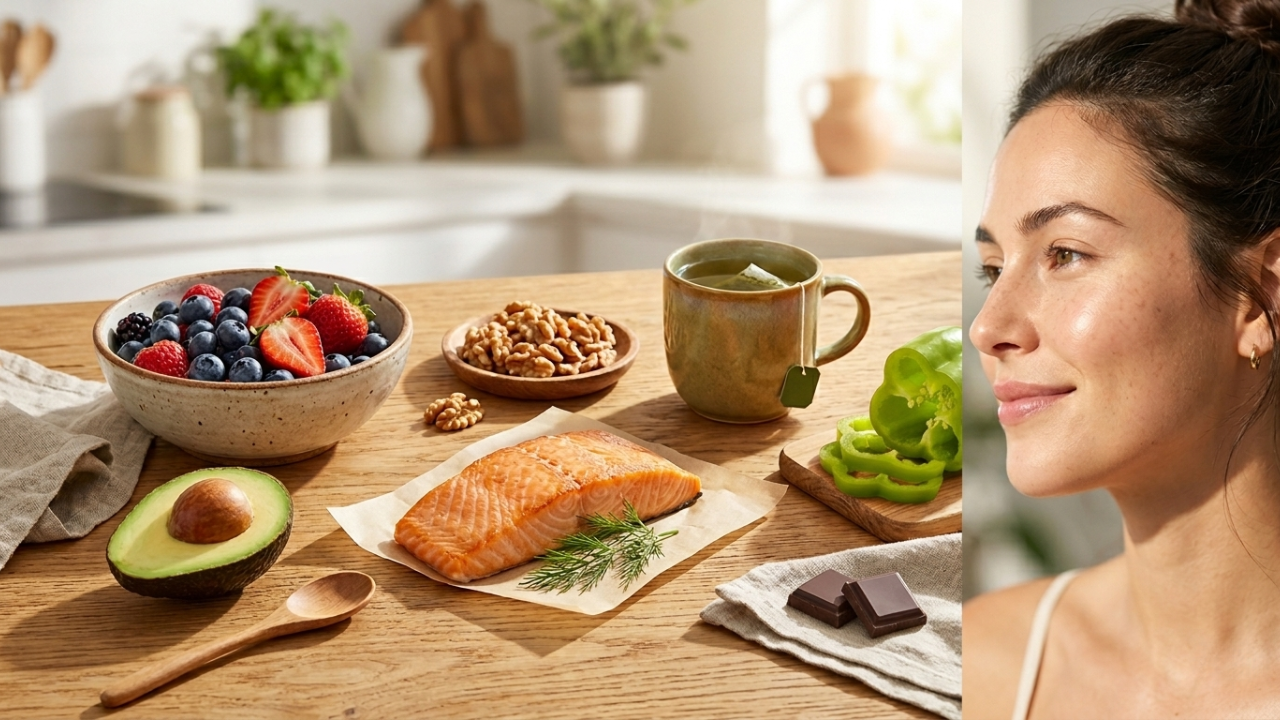
Now that you know how nutrition impacts skin health, here are the best foods to eat. If you want glowing skin from the inside out, here are the top ten foods to eat regularly.
Berries: Blueberries, strawberries, raspberries, and blackberries are packed with antioxidants called anthocyanins. These protect your skin from free radical damage and reduce inflammation. Eat a handful every day. Fresh or frozen, both work. Add to oatmeal, yogurt, smoothies, or eat alone.
Leafy Greens: Spinach, kale, arugula, and Swiss chard are rich in vitamin C, vitamin E, beta-carotene, and iron. Vitamin C helps make collagen. Vitamin E protects cell membranes. Beta-carotene turns into vitamin A, which regulates skin cell production. Eat one to two cups daily. Add to salads, smoothies, soups, or stir-fries.
Fatty Fish: Salmon, mackerel, sardines, and trout are rich in omega-3 fatty acids. Omega-3s reduce inflammation, strengthen the skin barrier, and keep skin hydrated. They also protect against sun damage. Eat two to three servings per week. Canned sardines and wild salmon are affordable options.
Nuts and Seeds: Walnuts, almonds, flaxseeds, chia seeds, and sunflower seeds provide vitamin E, zinc, and healthy fats. Vitamin E protects against sun damage. Zinc helps heal wounds and fight bacteria that cause acne. Eat a small handful daily. Add to oatmeal, yogurt, salads, or eat as a snack.
Avocado: Avocados are rich in healthy monounsaturated fats, vitamin E, and vitamin C. The fats keep your skin flexible and moisturized. Vitamin E protects against oxidative damage. Eat half an avocado daily. Add to toast, salads, smoothies, or eat with a spoon.
Sweet Potatoes: Sweet potatoes are packed with beta-carotene, which your body converts to vitamin A. Vitamin A acts as a natural sun protectant and helps prevent dry, rough skin. Eat one medium sweet potato a few times per week. Roast, mash, or bake.
Bell Peppers: Red and yellow bell peppers contain more vitamin C than an orange. Vitamin C is essential for collagen production. Without enough vitamin C, collagen becomes weak and skin sags. Eat raw or lightly cooked. Add to salads, stir-fries, or eat with hummus.
Green Tea: Green tea is rich in catechins, which are powerful antioxidants. Catechins protect against sun damage, reduce inflammation, and improve skin elasticity. Drink one to three cups daily. Hot or iced both work. Skip the sugar.
Bone Broth: Bone broth is rich in collagen, gelatin, and amino acids that your body uses to build its own collagen. Drinking bone broth regularly can improve skin elasticity and hydration. Drink one cup daily. Make your own or buy good-quality store-bought.
Dark Chocolate: Dark chocolate (70 percent cocoa or higher) contains flavanols that improve blood flow to your skin, increase hydration, and protect against sun damage. Eat one small square daily. The darker the better. Milk chocolate does not count.
For more ways to get glowing skin naturally, check out our guide on What Makes Skin Glow Naturally.
What are the Worst Foods for Skin Health?

Part of understanding how nutrition impacts skin health is knowing what to avoid. Here is what to reduce or avoid.
| Food | What It Does to Skin |
|---|---|
| Sugar and sweets | Causes inflammation, breaks down collagen, triggers acne |
| White bread and pasta | Spikes blood sugar, increases oil production, worsens acne |
| Fried foods | Creates free radicals, increases inflammation, clogs pores |
| Processed meats (bacon, sausage, deli meat) | High in salt and preservatives that dehydrate skin and cause puffiness |
| Dairy | Triggers acne in many people, especially milk and ice cream |
| Alcohol | Dehydrates skin, causes redness, weakens skin barrier |
| Highly processed snacks (chips, crackers) | Full of unhealthy fats and salt that cause inflammation and puffiness |
| Sugary drinks (soda, sweetened coffee, juice) | Spikes blood sugar faster than solid food, leading to breakouts |
Learn how stress also damages your skin in our guide on How Stress Affects Your Skin and Hair.
Let’s wrap it up!
Your skin reflects what you put into your body. You can buy the most expensive creams in the world, but if you are eating sugar, fried foods, and processed snacks every day, your skin will never truly glow. The reverse is also true. Eat antioxidant-rich berries, healthy fats from avocado and fish, vitamin C from bell peppers, and collagen-boosting bone broth, and your skin will start glowing from the inside out.
Now you understand how nutrition impacts skin health. Start with one change this week. Make sure to eat a handful of berries daily. Add leafy greens to one meal each day. Eat fatty fish twice a week. Snack on nuts and seeds. Drink green tea instead of soda. And most importantly, be patient. Skin takes about four to six weeks to show the effects of dietary changes. Give your new habits time to work.
Quick Reference Table:
This table summarizes how nutrition impacts skin health for each concern.
| Skin Concern | Best Food | Why It Works |
|---|---|---|
| Acne | Fatty fish, green tea | Reduces inflammation |
| Dry skin | Avocado, nuts, seeds | Provides healthy fats |
| Dull skin | Berries, bell peppers | Provides antioxidants and vitamin C |
| Wrinkles | Bone broth, fatty fish | Supports collagen production |
| Redness | Green tea, leafy greens | Reduces inflammation |
| Puffiness | Green tea, berries | Reduces water retention and inflammation |
Disclaimer: I am not a doctor, dermatologist, or nutritionist. This information is for educational purposes only and does not replace professional medical advice. If you have persistent skin concerns or dietary restrictions, please consult a qualified healthcare professional.
Last updated: March 2026
Written by KGlow Writer
I’m not a dermatologist or medical professional. I research skincare, nutrition, and wellness, test natural approaches at home, and share what I learn. This information is for educational purposes only. Always consult a doctor for medical concerns.
Have a question? Contact me through your website.
Leave a Reply (your existing comment form stays here)