If you have ever felt confused about why your hair does not behave the way you want, you are not alone.
Learning how to identify your hair type was the one thing that changed everything for me.
For years, I bought shampoos and oils based on what others recommended. Some worked okay. Most did not. My hair would look smooth one day and frizzy the next, and I never understood why.
Then I realized something simple but important.
I was trying to care for hair I did not even know.
Once I understood how to identify my hair type, my routine became simpler. I stopped wasting money on products that were never meant for my hair. And slowly, my hair started looking and feeling better — not because I used expensive things, but because I finally understood what it actually needed.
If you have ever felt frustrated with your hair, this guide is for you. No complicated terms. Just gentle, honest help.
What is Hair Type
Hair type is simply the natural shape and behavior of your hair when you leave it alone — no styling, no heavy products, no heat.
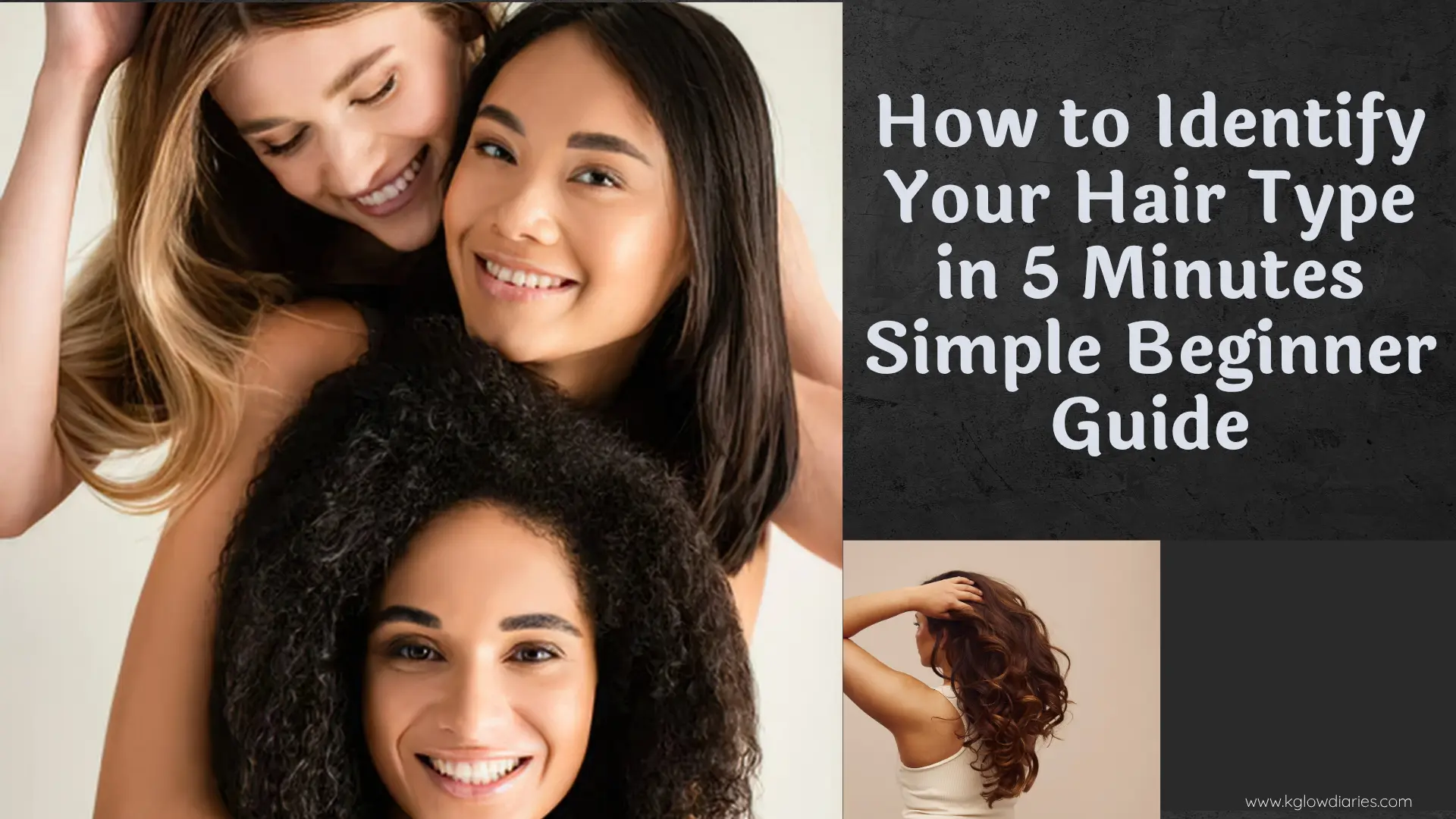
Some people have hair that falls completely straight. Some have soft bends. Others have clear curls or tight little coils.
None of these are good or bad. They are just different.
And here is something I learned the hard way: your hair type affects almost everything — how often you should wash it, what kind of moisturizer works best, why it gets frizzy, and even why it sometimes feels dry no matter what you do.
Once you understand how to identify your hair type, you stop fighting your hair and start working with it.
For more hair care help, check out my guide on hair oils and evidence limits.
The Different Hair Types Explained Simply
Let me explain this the way I wish someone had explained it to me years ago — without confusing charts or fancy words.
Straight hair
This type lies flat from root to tip. It often looks smooth and shiny because natural oils travel down the hair easily. The downside? It can look oily faster than other types. If your hair dries completely straight without any bend, this is likely your type.
Wavy hair
This one sits between straight and curly. It forms soft bends or loose S shapes, usually from the middle to the ends. It is not fully straight, but it is not fully curly either. Sometimes it looks smooth near the roots and wavy at the ends. Many people with wavy hair also deal with a little frizz now and then.
Curly hair
Curly hair forms clear curls or ring shapes. It has more volume than straight or wavy hair. But because the natural oils from your scalp struggle to travel down the curls, it can feel dry more often. If your hair forms obvious curls when left natural, this is your type.
Coily hair
Coily hair has very tight curls or small coils. It looks full and thick but shrinks in length when dry. This type needs the most moisture because the oils have a very hard time moving through the tight pattern. If your hair forms tiny tight coils, this is coily hair.
One thing I have noticed over time is that many people do not fit perfectly into one box. You might have wavy hair in some areas and slightly curlier sections in others. That is completely normal.
How to Check Your Hair Type at Home
This is the part I love because it is so simple — and it only takes about 5 minutes of actual effort.
Here is what I usually suggest to anyone who asks me:
Wash your hair with a regular shampoo. Nothing heavy. Just a simple clean.
Keep your usual gentle conditioning step if it helps detangling. Avoid heavy styling products if you want to observe your pattern. There is no need to make hair uncomfortable or skip necessary care for a test.
Let your hair air dry naturally. Do not rub it with a towel too much. Do not blow dry. Just let it be.
Once it is completely dry, stand in front of a mirror and just look.
If it dried flat and straight, your hair type is straight.
If it dried with soft bends or loose waves, it is wavy.
If clear curls formed, it is curly.
If tight small coils appeared, it is coily.
That is it. No expensive test. No confusing tools. Just you and your natural hair.
Observe more than once if you are unsure. A five-minute look does not include drying time and cannot reveal every aspect of hair condition.
Simple Hair Care Tips Based on Your Type
Once you know your hair type, you start noticing what it actually likes and what it does not like.
For straight hair, light products work best. Heavy creams or thick oils can make it look flat very quickly. A simple shampoo, light conditioner, and occasional dry shampoo are often enough.
For wavy hair, balance is everything. Too much product weighs down the waves. Too little leads to frizz. A light leave-in conditioner or a soft styling cream can help define the waves without making them heavy.
For curly hair, moisture becomes your best friend. Curls need hydration to stay soft and defined instead of dry and frizzy. A good conditioner, a curl cream, and gentle handling go a long way. Also, try not to brush dry curls — it leads to breakage and puffiness.
For coily hair, rich moisture is essential. Cream-based products and natural oils help keep the hair soft. Protective styles and regular deep conditioning can make a big difference over time. And always handle coily hair gently to avoid damage.
The most important thing I have learned is this: do not overcomplicate your routine. Start simple. Pay attention to how your hair reacts. Then adjust slowly.
For more natural hair care, here is my DIY hair mask for dry frizzy hair.
Common Mistakes People Make
I have made almost every mistake on this list myself, so do not feel bad if you have too.
One very common mistake is copying someone else’s routine exactly. It is easy to do, especially when you see someone with beautiful hair recommending a product. But hair types are different. What works for your friend may leave your own hair feeling completely wrong.
Another mistake is using too many products at once. I used to think more products meant better results. But often, it just made my hair feel heavy, dull, or greasy.
Many people also try to force their hair into a type it is not. For example, brushing curly hair to make it look straight, or adding heavy creams to straight hair to create waves. Working with your natural hair feels much lighter than fighting against it.
For more natural hair care, here is my DIY hair mask for dry frizzy hair.
And finally, some people expect quick changes. Hair care is slow. It takes time, consistency, and patience.
FAQs
How do I know my hair type is correct?
Observation gives a useful description, not a definitive test. Mixed patterns, styling history and damage can affect what you see.
Can my hair type change over time?
Pattern and texture can change with age, hormones, treatments and damage. A sudden unexplained change or scalp symptoms may deserve assessment.
Why does my hair feel different on some days?
Weather, humidity, products, and even stress can affect how your hair behaves on any given day.
Is frizz a hair type?
No. Frizz can happen with any hair type. It is usually a sign of dryness or humidity.
Do I need expensive products for my hair type?
Not at all. Simple, suitable products work just fine. Understanding how to identify your hair type matters more than the price of what you use.
For more hair care help, check out my guide on best hair oil for fast hair growth.
Putting your observations to use
Learning how to identify your hair type is not complicated.
It just takes a few quiet minutes of observing your natural hair without products or heat.
Once you understand it, everything else becomes easier. You stop guessing. You stop wasting money. You stop feeling frustrated.
Your hair does not need to be perfect. It just needs to be understood.
Take a little time to know your hair. It is one of the kindest things you can do for your daily routine.
Source
Written by KGlow Writer. I am not a dermatologist or medical professional. This article is for general education and does not replace individualized care. Last reviewed: October 9, 2026.