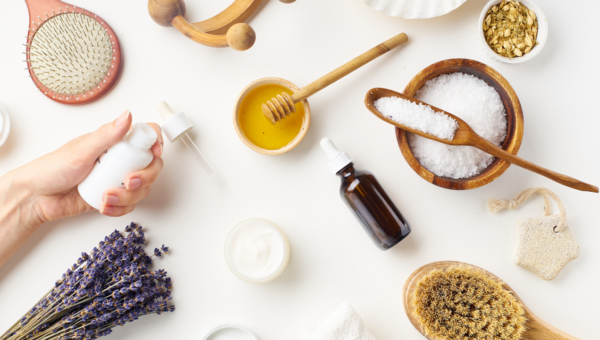
Kitchen skincare is inexpensive and familiar, but edible ingredients are not automatically safe or effective on the face. This guide separates the appeal of ten popular ingredients from what you can reasonably expect. It replaces earlier treatment recipes and promises of natural transformation.
Why an ingredient is different from a finished product
Research on a purified ingredient, a wound-care preparation or a cosmetic formula cannot automatically be applied to a pantry mixture. Concentration, formulation, preservation and intended use matter. Natural and synthetic ingredients can both cause irritation or allergy. A long ingredient name is not a useful way to judge safety.
Start with a gentle cleanser, a moisturizer suited to your skin, and sun protection. Optional masks and scrubs should not take the place of these basics. See the beginner skincare routine.
Ten ingredients: limits and cautions
1. Honey. Kitchen honey is not the same as a medical-grade wound dressing. Do not use it to treat infected skin, open wounds or acne. People can react to ingredients they normally eat, and a sticky mask is not essential for hydration.
2. Oats. Formulated colloidal oatmeal products can help soothe skin. Ordinary oats mixed with water or yogurt are not equivalent. Avoid abrasive rubbing, and avoid oat products if you have an oat allergy.
3. Yogurt. Its food composition does not make it a controlled lactic-acid exfoliant. There is no reliable at-home concentration or exposure time that makes yogurt a treatment for pigmentation or acne. Keep it off broken or irritated skin.
4. Turmeric. Findings about curcumin do not prove that a kitchen turmeric mask clears acne or dark spots. It can stain skin, fabric and surfaces, and a homemade mixture can irritate. It is not recommended here as a spot treatment.
5. Aloe vera. Aloe is included in some skincare products, but fresh plant gel is not a sterile or standardized preparation. Check ingredient labels and avoid products that sting. Severe sunburn or a wound needs appropriate care rather than a home experiment.
6. Coconut oil. An oil may leave skin feeling softer, but it does not suit everyone and may worsen breakouts for some people. It should not be presented as a universal facial moisturizer or a treatment for skin disease.
7. Lemon. Leave citrus juice off facial skin. Plant and citrus contact followed by sunlight can cause phytophotodermatitis, with redness, blistering or discoloration. Dilution, nighttime use and a home patch test do not establish safety. Lemon juice is not interchangeable with formulated vitamin C.
8. Coffee grounds. Their particles can be abrasive. Coffee in a kitchen scrub has not been shown here to treat cellulite, tighten skin or safely brighten the eye area. Avoid rubbing grounds on the face or around the eyes.
9. Cucumber. A cool sensation is not proof of a treatment effect. For temporary comfort, a clean cool compress on closed eyelids avoids placing food near the eyes. Persistent swelling, pain or vision changes need medical assessment.
10. Green tea. Drinking tea, using a formulated extract and applying a homemade infusion are different exposures. Homemade tea is not sunscreen. Do not use tea bags as an eye treatment or rely on tea for protection from sunlight.
What to do instead of adding another recipe
Choose one concern to address, such as dryness or difficulty removing sunscreen. Keep your routine steady and change one product at a time so you can identify irritation. If dryness is the concern, a fragrance-free moisturizer is a more predictable starting point than a food mask. Persistent acne, unexplained redness or changing pigmentation deserves professional advice.
Follow a product’s label when checking tolerance. Testing a small area can reveal some reactions, but it cannot guarantee that an ingredient is safe for your face or rule out a delayed or sunlight-related reaction. Never keep using something because a recipe says tingling means it is working.
Storage and hygiene
The earlier recipes and fixed application schedules have been removed. This article does not assign a safe shelf life to unpreserved homemade mixtures. Refrigeration alone is not a preservation system. Avoid putting food preparations on broken skin or near the eyes, and stop any experiment that causes discomfort.
Sources and further reading
AAD: Facial masks and skin care
AAD: Safe exfoliation
DermNet: Phytophotodermatitis
Written by KGlow Writer. I am not a dermatologist or medical professional. This article is for general education and does not replace individualized care. Last reviewed: October 9, 2026.