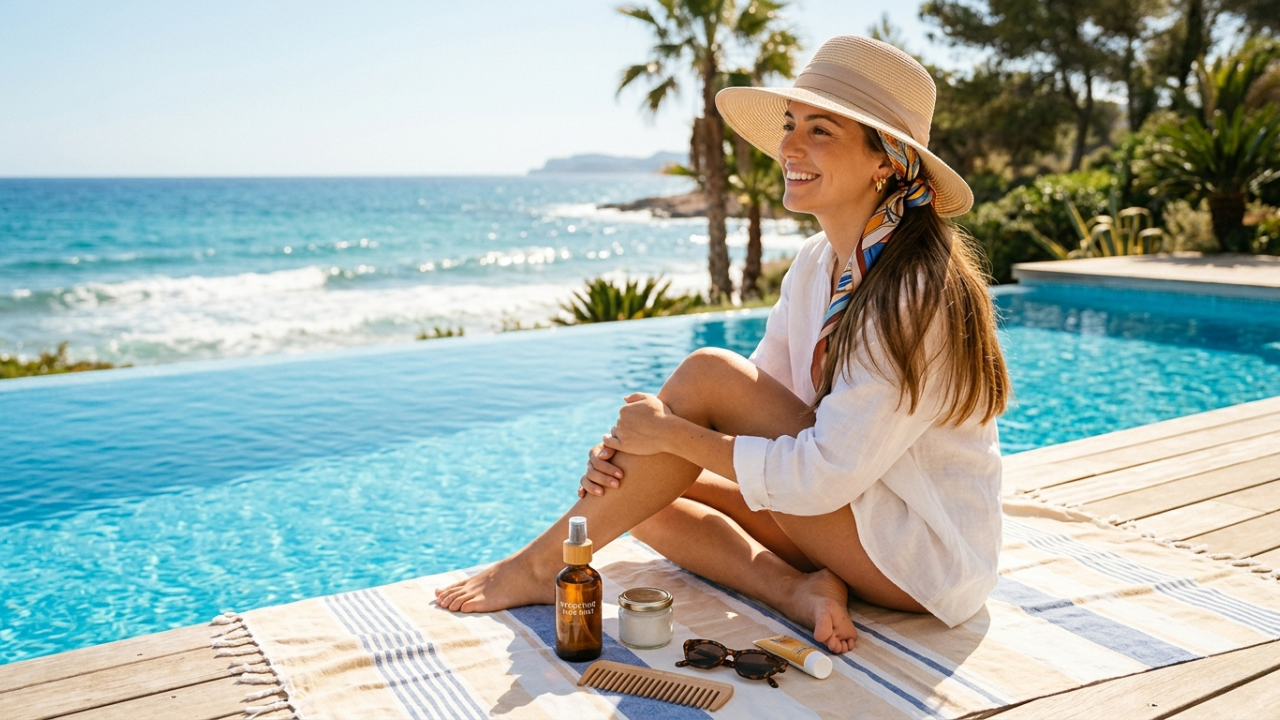
Looking for a summer hair care routine that prevents damage without hours of work? Start here.
Summer is supposed to be fun. Sunshine, beach days, pool parties, and long evenings outside. But your hair does not always agree. The same sun that gives you a tan can bake your hair until it is dry and brittle. Chlorine and salt water strip away natural oils. Humidity turns straight hair into frizz and curls into chaos. Here I am going to share exactly how summer damages your hair and, more importantly, a simple routine to prevent damage so your hair stays healthy, shiny, and strong all season long.
A good summer hair care routine is different from what you do in winter.
Disclaimer: I am not a doctor or dermatologist. This information is for educational purposes only and does not replace professional medical advice. If you have persistent scalp or hair concerns, please consult a qualified healthcare professional.
What is Summer Hair Damage? (Your Summer Hair Care Routine Starts Here)
Well, summer hair damage means your hair becomes dry, brittle, frizzy, faded, or broken because of summer-specific stressors like UV rays, heat, humidity, chlorine, salt water, and sweat. Your hair is made of a protein called keratin. The outer layer, called the cuticle, protects the inner layers. When summer elements attack your hair, they lift and crack the cuticle, exposing the inner layers to more damage. Naturally, having healthy summer hair means you protect your hair from these elements before they cause permanent harm.
What are the main characteristics of summer-damaged hair?
- Your hair feels dry and straw-like even after conditioning
- You see more split ends than usual
- Color-treated hair fades much faster
- Natural hair color looks lighter or brassy
- Your hair breaks easily when you brush it
- Frizz is out of control, even with products
- Your scalp feels sunburned or itchy
- Hair looks dull instead of shiny
Existing damage cannot always be reversed. Care can improve appearance and reduce further weathering, but this guide cannot promise a result within a few weeks.
Now, what’s the science behind Summer Hair Damage?
Based on what I’ve researched, four key factors are UV radiation, humidity, chlorine/salt water, and heat styling, which I am going to share with you about summer hair damage science. The first one is UV Radiation, the second is Humidity, the third is Chlorine and Salt Water, and the fourth is Heat Styling. Now, let’s dive deeply into how?
Sun exposure can weather the hair shaft and fade color. The earlier unsourced claim of a 40 percent strength reduction has been removed.
Humidity: Humidity is water vapor in the air. When humidity is high, water molecules attach to your hair and break the hydrogen bonds that hold your hair’s shape. This causes the hair shaft to swell unevenly, which leads to frizz. Curly and wavy hair is more affected because the cuticle is already slightly lifted. Straight hair gets limp and greasy in humidity because moisture makes oil spread more easily.
Pool exposure may leave hair rough or discolored. Green discoloration is associated with copper in pool water, not simply chlorine binding to hair proteins. Rinse after swimming and use appropriate hair care.
Heat Styling: Summer is hot. You are already sweating. Adding a blow dryer, flat iron, or curling iron on top of summer heat is a recipe for disaster. Heat styling breaks down the hydrogen bonds in your hair. A little bit of heat is fine, but repeated heat on already sun-damaged hair causes cracks in the cuticle and bubbles inside the hair shaft. Once those bubbles form, the hair will break at that spot.
What are a few signs that summer is damaging my hair?
If you suspect summer is harming your hair, here are specific signs to look for. You will only see improvement if you start protecting your hair now.
- Dryness: Hair feels rough, tangles easily, looks dull, and has no shine even when clean
- Breakage: Small pieces of hair on your shoulders or in your brush, ends look frayed, hair snaps when pulled gently
- Frizz: Hair puffs up in humid weather, curls lose their definition, and flyaways are everywhere
- Fading: Color-treated hair looks dull or changes color within weeks, natural highlights become too light or brassy
- Scalp issues: Itchy, flaky, red, or painful scalp after being outside, dandruff increases
- Split ends: White dots at the ends of hair, ends look frayed like a rope, hair tangles at the bottom
The Ultimate Summer Hair Care Routine: 10 Simple Steps
Here is your complete summer hair care routine, step by step.
If you need to protect your hair this summer, there are many natural and simple ways. I will try to cover all, but you will only get the result if you follow these consistently. Your hair’s summer routine should be different from your winter routine.
Wash:
Wash according to sweat, scalp oil and buildup rather than a fixed summer schedule. Use a shampoo you tolerate and follow its instructions. Frequent swimming may require specific cleansing; avoid overusing strong clarifying products.
Condition:
Condition every time you wash. Leave conditioner on for at least 2 to 3 minutes. Use a deep conditioning mask once a week. Look for ingredients like shea butter, coconut oil, argan oil, aloe vera, and glycerin. These add moisture and seal the cuticle. For extra protection, use a leave-in conditioner after every wash. This creates a barrier between your hair and summer elements.
Protect:
Wear a suitable hat for sun protection and protect exposed scalp with labeled sunscreen. A heat protectant is not automatically a UV protectant. Coconut and argan oils are not reliable sunscreen substitutes; the earlier SPF 5–8 advice has been removed.
Dry:
Let your hair air dry as much as possible in summer. Heat styling on top of summer heat is too much. If you must use a blow dryer, use the cool setting. Keep the dryer moving and at least 6 inches away from your hair. Never go to bed with wet hair in summer. Wet hair is weaker, and tossing and turning on a pillow causes breakage.
Style:
Choose summer-friendly hairstyles that minimize damage and heat. Loose braids, buns, ponytails, and top knots keep hair off your neck and reduce sweat. Avoid tight styles that pull on your roots (like tight ponytails or cornrows) because they cause traction alopecia over time. Use soft scrunchies or silk hair ties instead of rubber bands or elastics with metal pieces.
Swim:
Before swimming in a pool or ocean, wet your hair with fresh water and apply a leave-in conditioner or a few drops of coconut oil. Wet hair absorbs less chlorine and salt water than dry hair. The conditioner or oil acts as a barrier. After swimming, rinse your hair immediately with fresh water. Use a swimmer’s shampoo once a week if you swim often.
Night:
Sleep on a silk or satin pillowcase. Cotton pillowcases absorb moisture from your hair and create friction that causes breakage. Silk and satin are smooth and keep your hair hydrated. If your hair is long, put it in a loose bun or braid before bed. This prevents tangles and friction damage while you sleep.
Eat:
Adequate nutrition and fluid support general health. Hair dryness alone does not diagnose dehydration or a nutrient deficiency. Do not start supplements solely because hair feels dry.
Trim:
Trim damaged ends when needed; the interval depends on your hair and preferences. Trimming removes split ends but does not accelerate growth at the root.
Cover:
Use shade and a suitable hat when outdoors, and protect exposed scalp according to sunscreen instructions. There is no guaranteed safe 15-minute unprotected interval.
Let’s wrap it up!
Adjust washing to your scalp, condition as needed, limit unnecessary heat and protect hair from sun and pool exposure. Results vary with texture, prior damage and the products used.
The visible hair shaft is not living tissue. Gentle handling can reduce further damage, but a routine cannot guarantee shiny or undamaged hair all season.
Quick Reference Table:
This table summarizes your summer hair care routine for each problem.
“Use this quick reference as part of your daily summer hair care routine:
| Summer Stressor | One Simple Fix |
|---|---|
| Sun/UV rays | Wear a hat or use UV protectant spray |
| Humidity | Leave-in conditioner and silk pillowcase |
| Chlorine | Wet hair with fresh water before swimming |
| Salt water | Rinse immediately after swimming |
| Heat styling | Air dry or use cool setting |
| Sweat | Rinse scalp with water and dry gently |
| Fading color | Wear a hat and use sulfate-free shampoo |
Disclaimer: I am not a doctor or dermatologist. This information is for educational purposes only and does not replace professional medical advice. If you have persistent scalp or hair concerns, please consult a qualified healthcare professional.
Sources
AAD: Summer hair care
AAD: Sunscreen and scalp protection
Written by KGlow Writer. I am not a dermatologist or medical professional. This article is for general education and does not replace individualized care. Last reviewed: October 9, 2026.