Stress can interact with some skin and hair conditions, but a breakout or extra hair in the shower does not prove that stress is the cause. This guide explains the limits of that connection and how to seek useful help.
A connection is not a diagnosis
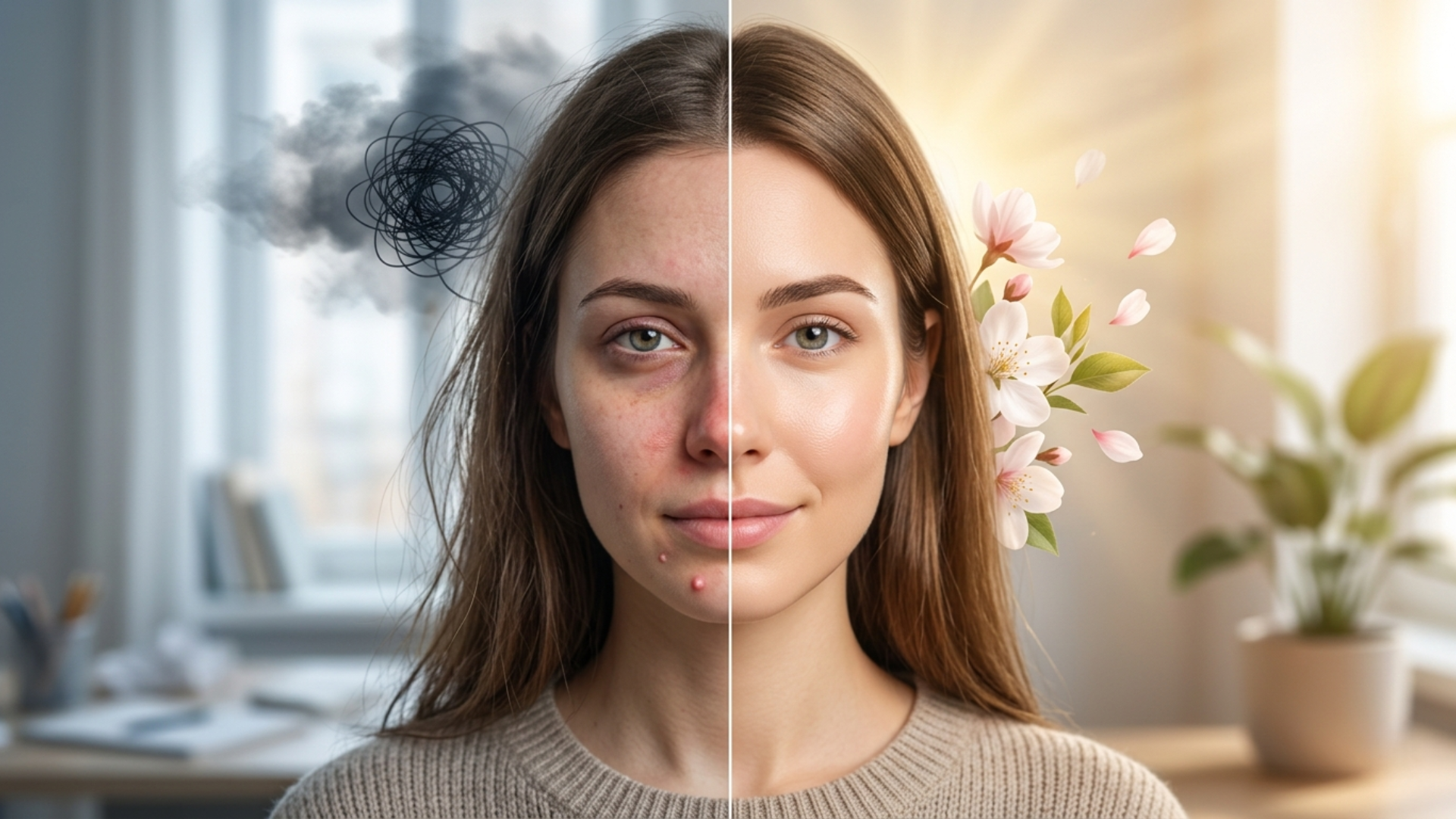
Stress may worsen symptoms of conditions such as acne or eczema for some people. Irritation, medicines, hormones and other triggers can also matter. A face map, dullness or a rash cannot measure cortisol. The earlier claims about cytokines directly attacking the barrier and stress visibly shortening telomeres were too certain and have been removed.
Shedding can appear after a trigger
Significant emotional or physical stress can be one trigger for telogen effluvium, a form of increased shedding. Illness, childbirth and other factors can also trigger it. The time between an event and shedding varies, and a clinician should distinguish this from other types of loss.
Circular bald patches, progressive thinning and painful scalp changes should not be grouped together as proof of stress. Do not assume that relaxation or massage will regrow hair.
Keep a record that helps assessment
Note when the problem began, whether it is worsening, recent illness or major life changes, new medicines and products, and any pain, itch or scale. Avoid repeatedly pulling hairs to test them. Photos taken in consistent lighting may help describe a change without turning it into a self-diagnosis.
Support your routine while getting help
Use skincare you tolerate and avoid adding several strong products at once. Handle hair gently and reduce tight styling or excessive heat. Continue prescribed treatment unless your clinician advises a change. These steps do not depend on proving that stress caused the problem.
Care for stress as a separate need
Rest, manageable activity and support from others may help coping. They are worthwhile even if the skin or hair problem has another cause. There is no requirement to eliminate stress before treatment can work, and no guarantee that breathing exercises lower cortisol or reverse visible changes.
When to seek care
Ask a qualified professional about sudden shedding, patches of loss, persistent acne, a painful rash, oozing or a symptom that is affecting daily life. Seek mental-health support if stress is persistent or difficult to manage. Do not delay either type of help while experimenting with home remedies.
Common questions
Does chin acne prove stress? No. Location alone cannot identify a cause.
Can scalp massage treat hair loss? It may feel relaxing, but this guide does not establish it as a regrowth treatment.
Is it my fault if my skin does not improve when I rest? No. Skin and hair conditions can need specific care.
Source
AAD: Skin and hair conditions linked to stress
Written by KGlow Writer. I am not a dermatologist or medical professional. This article is for general education and does not replace individualized care. Last reviewed: October 9, 2026.