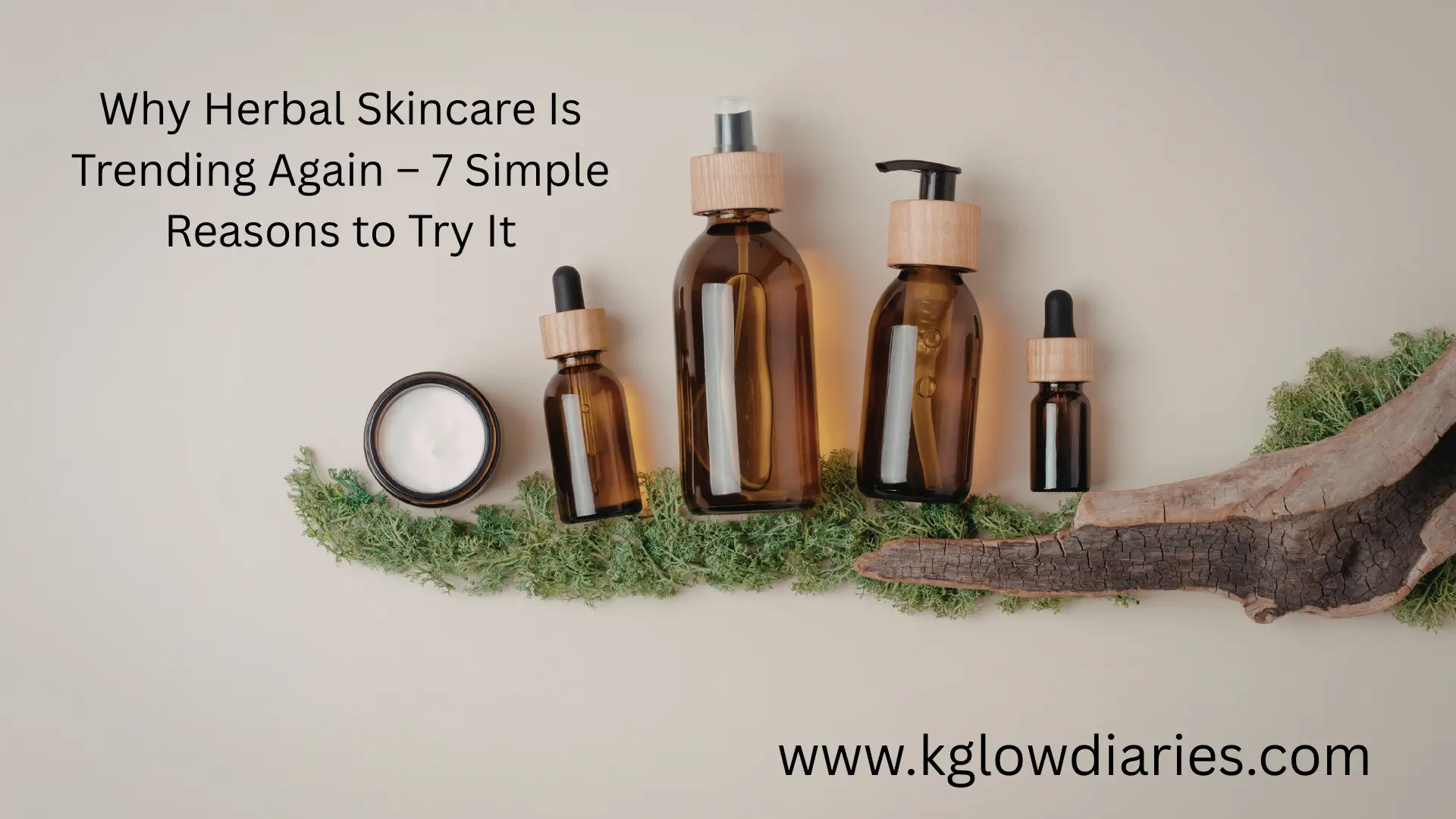
A plant ingredient can be appealing without being a proven treatment. This guide explains how to evaluate herbal skincare labels and evidence. The earlier claim of a renewed market trend was not supported by data and has been removed, along with claims that botanical products are automatically gentler.
Natural is a source, not a safety rating
Both plant-derived and synthetic ingredients can irritate or cause allergy. A familiar name does not establish safety, and a long chemical name does not make an ingredient harmful. Judge the finished product, intended use and your own tolerance.
Check what was actually studied
An antioxidant result in a laboratory does not show that a homemade tea rinse clears skin. A study of a specific extract does not apply automatically to kitchen turmeric, fresh aloe or every product carrying that name. Ask whether the research involved people, the same formulation and the same outcome.
Four familiar ingredients, four limits
Aloe: a formulated product and fresh plant gel differ in composition and preservation. Do not use aloe as a substitute for care of a significant burn or wound.
Rose water: fragrance can be unsuitable for reactive skin. A toner is optional, and rose water does not replace moisturizer or sunscreen.
Turmeric: traditional use does not establish an acne or pigmentation treatment. Kitchen masks can stain and irritate.
Green tea: a brewed infusion is not the same as a standardized cosmetic extract. It is not sunscreen and has no validated shelf life supplied here.
Read beyond the front label
Look at the complete ingredients, instructions and warnings. Check for ingredients you know you react to. “Organic,” “clean” and “herbal” do not tell you whether a product treats a condition. Preservatives serve a purpose; their absence is not automatically an advantage.
Keep a useful routine
Start with cleansing as needed, a tolerated moisturizer and sun protection. Add an optional product only if it solves a clear problem. Introduce one at a time and stop if it irritates. A small-area tolerance test cannot exclude every reaction.
When claims should make you pause
Be cautious with promises to cure acne, reverse age, remove pigmentation permanently or replace prescribed care. Testimonials and before-and-after pictures may omit lighting, other treatments and timing. A slower result promise is still a promise that needs evidence.
Questions before buying
What am I trying to improve? Does the product offer evidence for that outcome? Can a simpler product meet the same need? Is the ingredient list suitable for my allergies? If the concern is persistent acne, a rash or changing pigmentation, professional advice may be more useful than another botanical purchase.
Sources
FDA: Organic cosmetics and safety
NCCIH: Evidence on complementary approaches for skin conditions
Written by KGlow Writer. I am not a dermatologist or medical professional. This article is for general education and does not replace individualized care. Last reviewed: October 9, 2026.