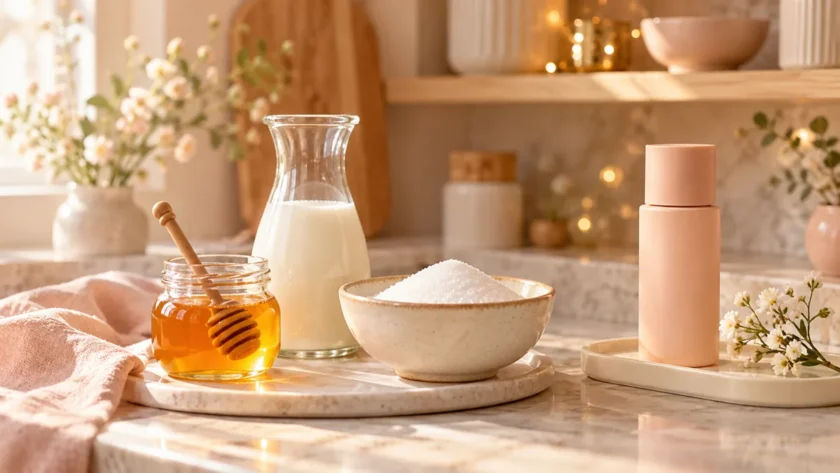
Milk, honey and sugar scrubs are a popular home-care idea. Their familiar ingredients can make them seem automatically gentle, but that is not a guarantee. The earlier version of this article included a stored milk-based recipe and recommended facial use. Those instructions have been removed.
What a sugar scrub can—and cannot—do
Sugar granules remove surface cells through friction. That may temporarily change how skin feels, but it does not establish a treatment for pigmentation, acne or a damaged skin barrier. Pressure and skin sensitivity matter, and brown sugar is not automatically safe for facial use.
Milk in a kitchen recipe is not a controlled lactic-acid skincare product. Honey does not cancel the effects of abrasion. No particular combination can promise silky, brighter or healthier skin for everyone.
Why the old storage advice was removed
The previous recommendation to refrigerate this mixture and keep it for a week did not have a validated basis. Fresh milk, water and repeated handling make homemade preparations difficult to assess. This guide does not recommend a storage period for an unpreserved scrub. A sealed container, pleasant smell or refrigeration does not prove safety.
Who should skip scrubs
Avoid exfoliating broken, sunburned, irritated or actively inflamed skin. People with eczema, very sensitive skin or an uncertain rash should ask a qualified professional before exfoliating. Avoid ingredients you are allergic to, including dairy, honey or nut-based substitutes. A different type of milk does not make a recipe universally safe.
Do not use this mixture on the face or near the eyes. Vanilla extract, fragrance and essential oils are unnecessary additions and can irritate. Stop if skin stings, becomes red, feels tight or starts peeling.
A gentler body-care routine
Start with a short lukewarm shower, a gentle cleanser where needed, and a fragrance-free moisturizer afterward. If roughness persists, check whether your cleanser, water temperature or washing habits are contributing before adding exfoliation.
If you choose an exfoliating product, follow its label and start cautiously. Do not combine dry brushing, a scrub and an acid exfoliant in the same session. Frequency depends on the product and your skin’s response; two or three times a week is not a universal target. Protect exposed skin from sunlight.
You do not need an expensive spa ritual to care for your skin. A simple routine you tolerate is a useful starting point. If rough patches persist, crack, itch or change, seek advice rather than scrubbing more. Read the body exfoliation guide for method selection and warning signs.
Common questions
Can I make this safe by using less sugar? There is no tested recipe supplied here. Reducing one ingredient does not validate the mixture’s safety or shelf life.
Do I have to exfoliate to moisturize properly? No. Moisturizing remains useful without a scrub. If a lotion stings or dryness continues, reassess the routine and seek advice when needed.
Can a home patch test guarantee safety? No. It may reveal some irritation but cannot rule out every reaction, and it cannot establish microbiological safety.
Further reading
AAD: How to safely exfoliate at home
AAD: Tips for relieving dry skin
Written by KGlow Writer. I am not a dermatologist or medical professional. This article is for general education and does not replace individualized care. Last reviewed: October 9, 2026.