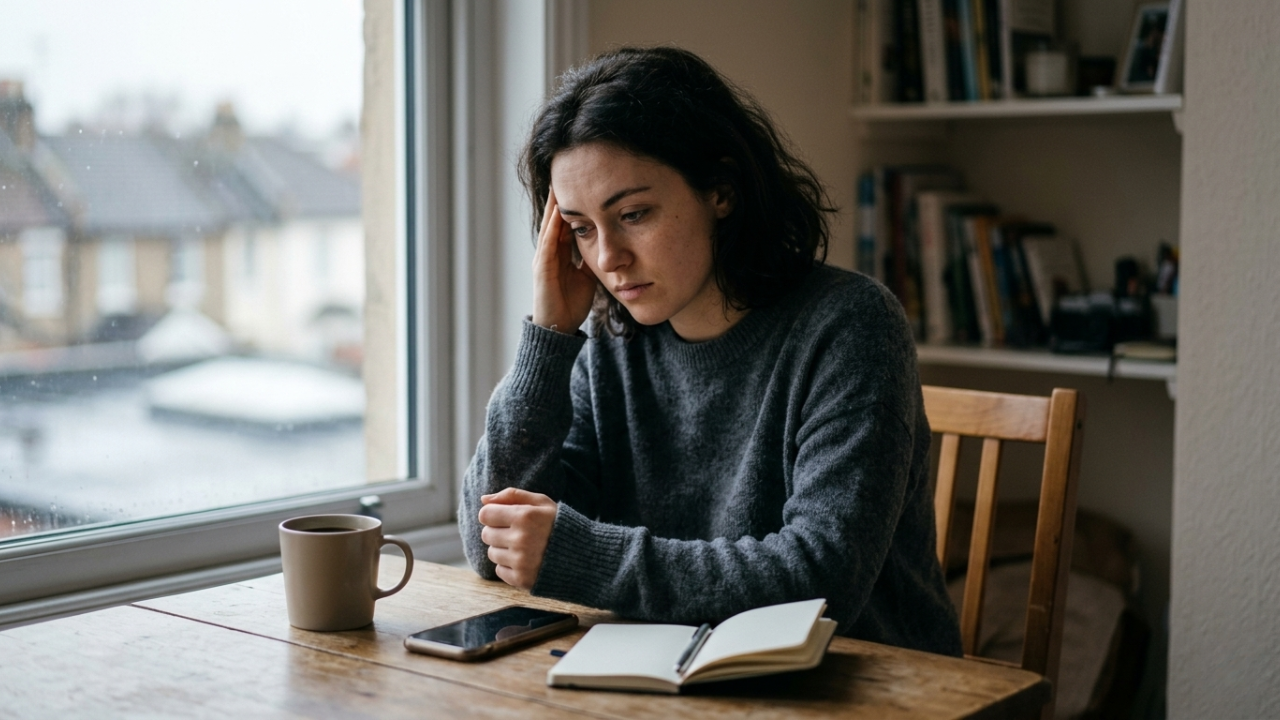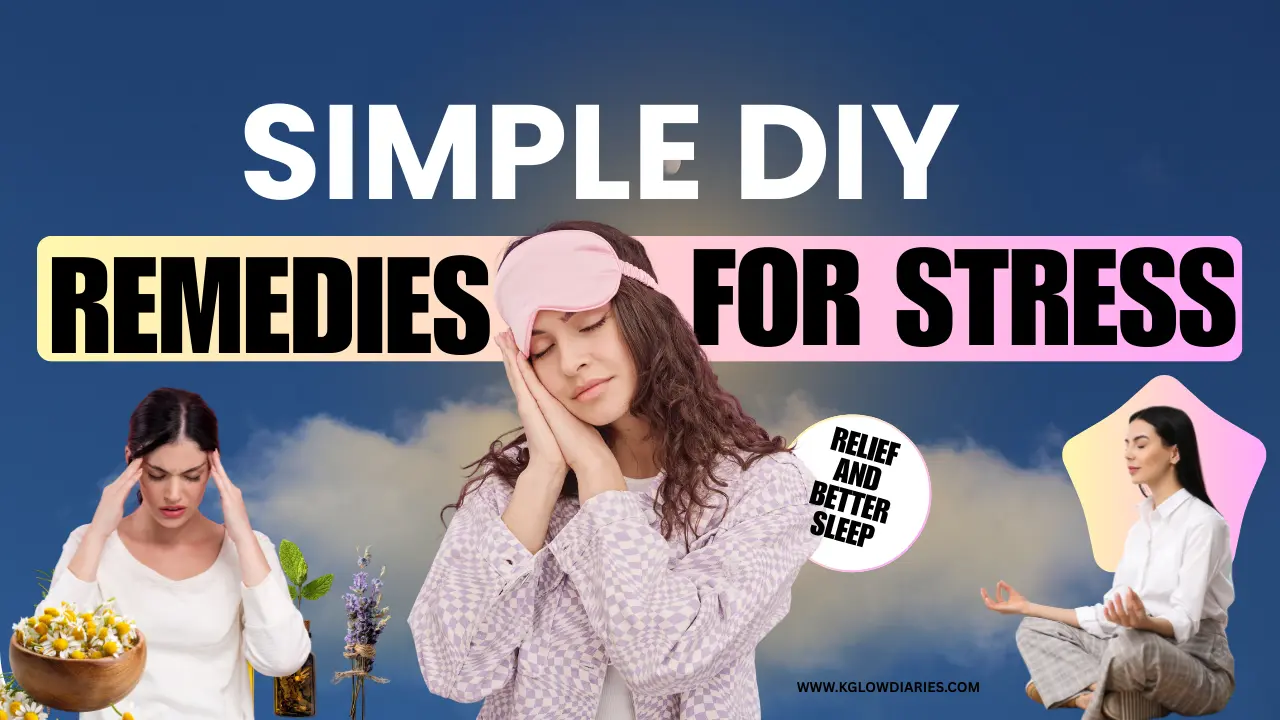
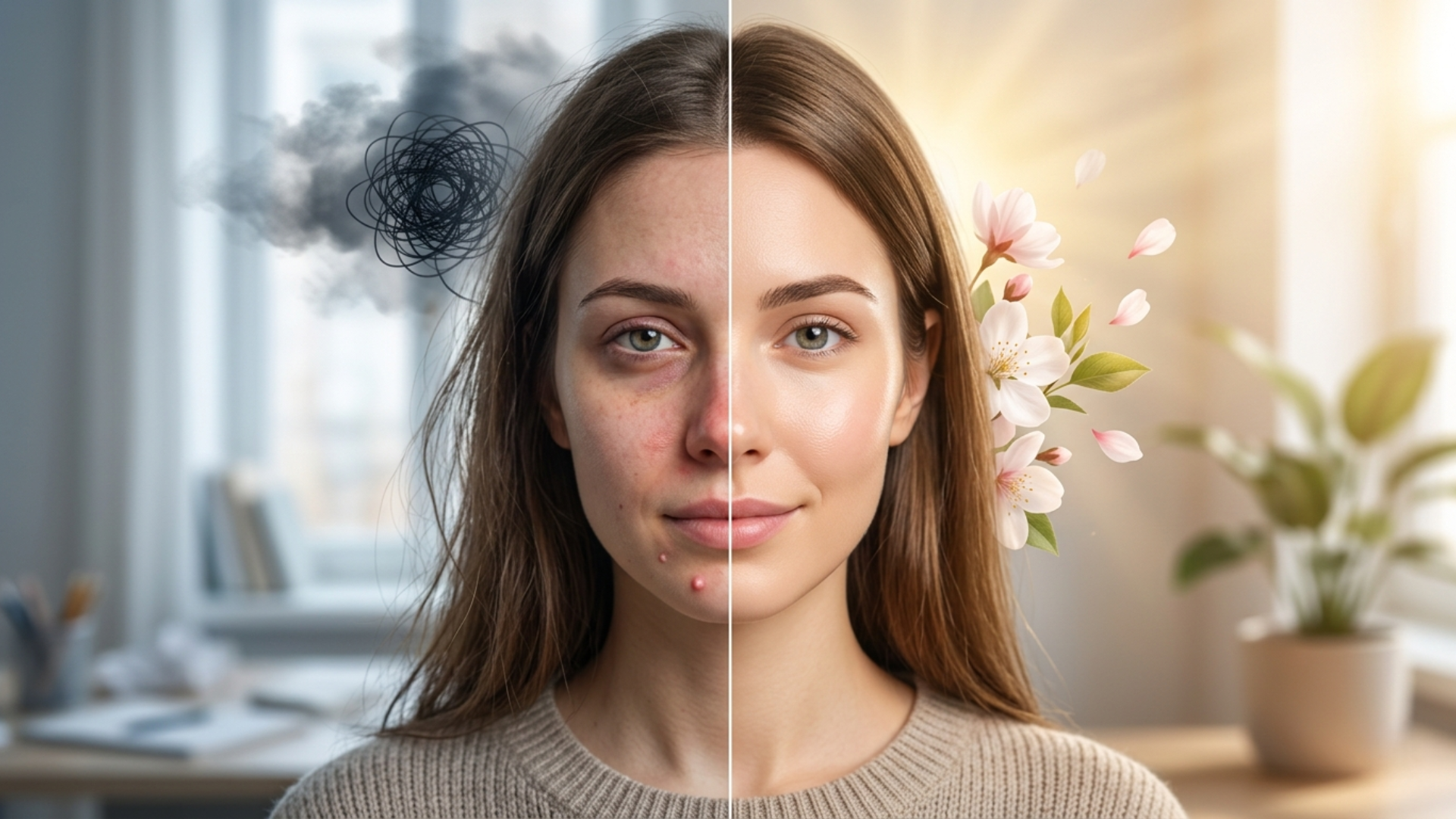
A side-by-side split image contrasting a stressed young woman on the left with a calm, glowing woman on the right. The left side features tired eyes, blemishes, redness, a dark cloud, and a tangled scribble against a cold background. The right side features bright eyes, clear skin, a healthy glow, blooming flowers, and warm sunlight against a peaceful background.
Lifestyle & Wellness

How Stress Affects Your Skin and Hair 7 Signs You Shouldn’t Ignore

Wondering how stress affects your skin and hair? Your body has clear answers.When you are constantly worried, overworked, or overwhelmed, your skin, hair, and overall health start sending you signals. Breakouts appear out of nowhere, your hair feels thinner, and you wake up tired even after eight hours of sleep. Here I am going to share exactly how stress affects your skin, hair, and overall health, and more importantly, what you can do to protect yourself naturally. Understanding how stress affects your skin and hair is the first step to fixing it

Disclaimer: I am not a doctor or dermatologist. This information is for educational purposes only and does not replace professional medical advice. If you have sudden hair loss, severe skin issues, or chronic health concerns, please consult a qualified healthcare professional.


What is Stress Doing to My Body?

Well, stress is not just a feeling in your head. It is a full-body experience. When you are stressed, your body releases hormones like cortisol and adrenaline. In small doses, these help you meet deadlines or avoid danger. But when stress becomes your daily companion, these same hormones start causing damage. Your skin becomes dull and reactive, your hair shifts into a shedding phase, and your overall health begins to decline slowly.

What are the main signs stress is affecting you?

  • You notice more breakouts or redness on your face
  • Your hair is falling out more than usual in the shower
  • You feel exhausted even after a full night of sleep
  • Your digestion feels off regularly
  • You get sick more often than before

“A gentle reminder, if stress is affecting your skin and hair, it does not mean you are doing anything wrong. It means your body is asking for help. Listening to that signal is an act of self-care, not failure.”


Now, what’s the science behind Stress and Your Appearance?

Based on what I’ve researched, three key factors are inflammation, hormone disruption, and cell aging, which I am going to share with you about stress science. The first one is Inflammation, the second is Hormone Disruption, and the third is Cellular Aging. Now, let’s dive deeply into how?

Inflammation: When you are stressed, your body produces inflammatory chemicals called cytokines. These directly attack your skin barrier, making it weaker. You will notice more redness, sensitivity, and slower healing. Acne flare-ups, eczema, and psoriasis all get worse with stress because inflammation turns up the volume on everything.

Hormone Disruption: Cortisol is the main stress hormone. When cortisol stays high for too long, it tells your skin to produce more oil, which clogs pores and causes acne. At the same time, high cortisol can push hair follicles into a resting phase called telogen effluvium. This means three to four months after a very stressful period, you may see clumps of hair falling out. Your overall health suffers because your sleep, appetite, and immune system all rely on balanced hormones.

Cellular Aging: Some research suggests that chronic stress actually shortens your telomeres. Telomeres are the protective caps at the ends of your chromosomes. Shorter telomeres mean faster aging. This shows up as fine lines, wrinkles, and loss of skin elasticity. Your overall health ages faster, too, including your heart and brain.


What are a few signs that stress is affecting my skin and hair?

If you suspect stress is damaging your appearance, here are specific signs to look for. You will only see improvement if you address the root cause, which is the stress itself.

  • Skin: Sudden acne breakouts especially on the jawline and chin, increased redness or rosacea flares, dry and flaky patches, slower wound healing, dark circles under the eyes, and dull, uneven tone.
  • Hair: Extra hair in your brush or shower drain, thinning around the crown or parting line, brittle and dry hair texture, and, in some cases, circular bald patches (alopecia areata).
  • Overall Health: Frequent headaches, muscle tension in the neck and shoulders, low energy even after resting, catching every cold that passes by, brain fog and forgetfulness, and changes in appetite.

What are Natural Ways to Protect My Skin, Hair, and Health from Stress?

If you need to reverse stress damage, there are many ways. I will try to cover all, but you will only get the result if you follow these consistently. Your skin and hair did not change overnight, and they will not heal overnight either.

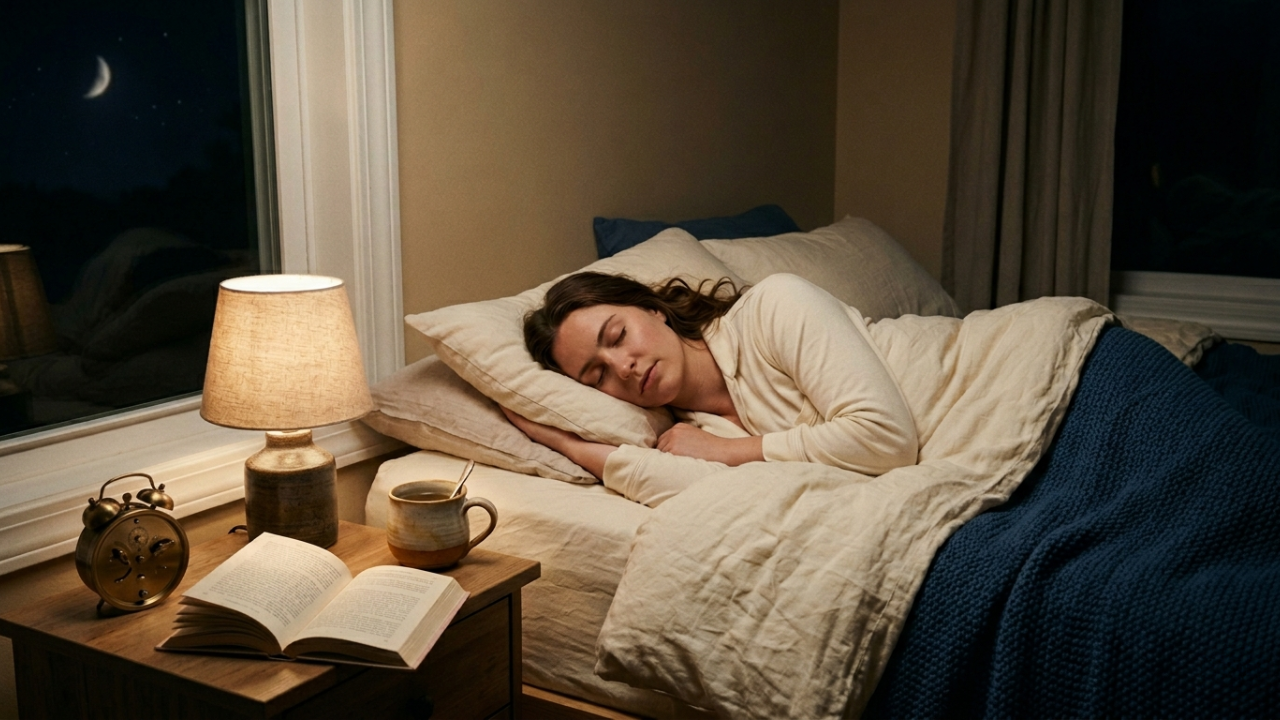
Sleep: This is the most powerful stress antidote. When you sleep, your body lowers cortisol and releases growth hormone to repair skin and hair cells. Aim for 7–9 hours. Keep your room dark and cool. No screens one hour before bed.

Deep Breathing: It sounds too simple, but it works. Box breathing (inhale 4, hold 4, exhale 4, hold 4) for five minutes lowers cortisol by signaling your nervous system to calm down. Do this when you wake up, before meals, or whenever you feel tension rising.

Anti-inflammatory Nutrition: What you eat directly affects how stress shows up on your face. Incorporate omega-3 fatty acids (salmon, walnuts, flaxseeds), antioxidant-rich berries, leafy greens, and green tea. Reduce sugar, processed foods, and caffeine after noon. These changes protect your skin barrier and hair follicles from inflammation.

Gentle Movement: Intense exercise can actually raise cortisol if you are already stressed. Instead, choose walking, yoga, tai chi, or gentle stretching. These lower cortisol while improving blood circulation to your skin and scalp, delivering oxygen and nutrients.

Scalp and Face Massage: A five-minute massage increases blood flow to hair follicles and facial tissues. Use your fingertips in small circles. No tools needed. This reduces tension headaches and encourages healthy hair growth while giving you an instant glow.

Boundaries and Rest: Your skin and hair cannot heal if you never rest. Schedule real breaks. Learn to say no. Take a full day off screens each week. Your appearance will reflect your internal peace more than any cream or vitamin ever could.


Let’s wrap it up!

Stress affects everything from your glowing skin to your hair thickness to your overall energy. The connection is real and backed by science. But the good news is that you can reverse much of the damage by managing your stress naturally. Make sure to prioritize sleep, as it is the most important step. Practice deep breathing daily. Eat anti-inflammatory foods. Move gently. Massage your face and scalp. And most importantly, permit yourself to rest.

Your skin, hair, and body are not separate from your mind. When you heal your stress, you heal your appearance from the inside out. By following a well-maintained routine, anyone can protect themselves from the visible damage of chronic stress.

Now that you know how stress affects your skin and hair, you can take action today.

Disclaimer: I am not a doctor or dermatologist. This information is for educational purposes only and does not replace professional medical advice. If you have persistent skin concerns, sudden hair loss, or chronic health issues, please consult a qualified healthcare professional.

Last updated: March 2026

Written by KGlow Writer

I’m not a dermatologist or medical professional. I research skincare, wellness, and stress management, test natural approaches at home, and share what I learn. This information is for educational purposes only. Always consult a doctor for medical concerns.

Have a question? Contact me through my website.

Leave a Reply (your existing comment form stays here)

Leave a Reply

Your email address will not be published. Required fields are marked *