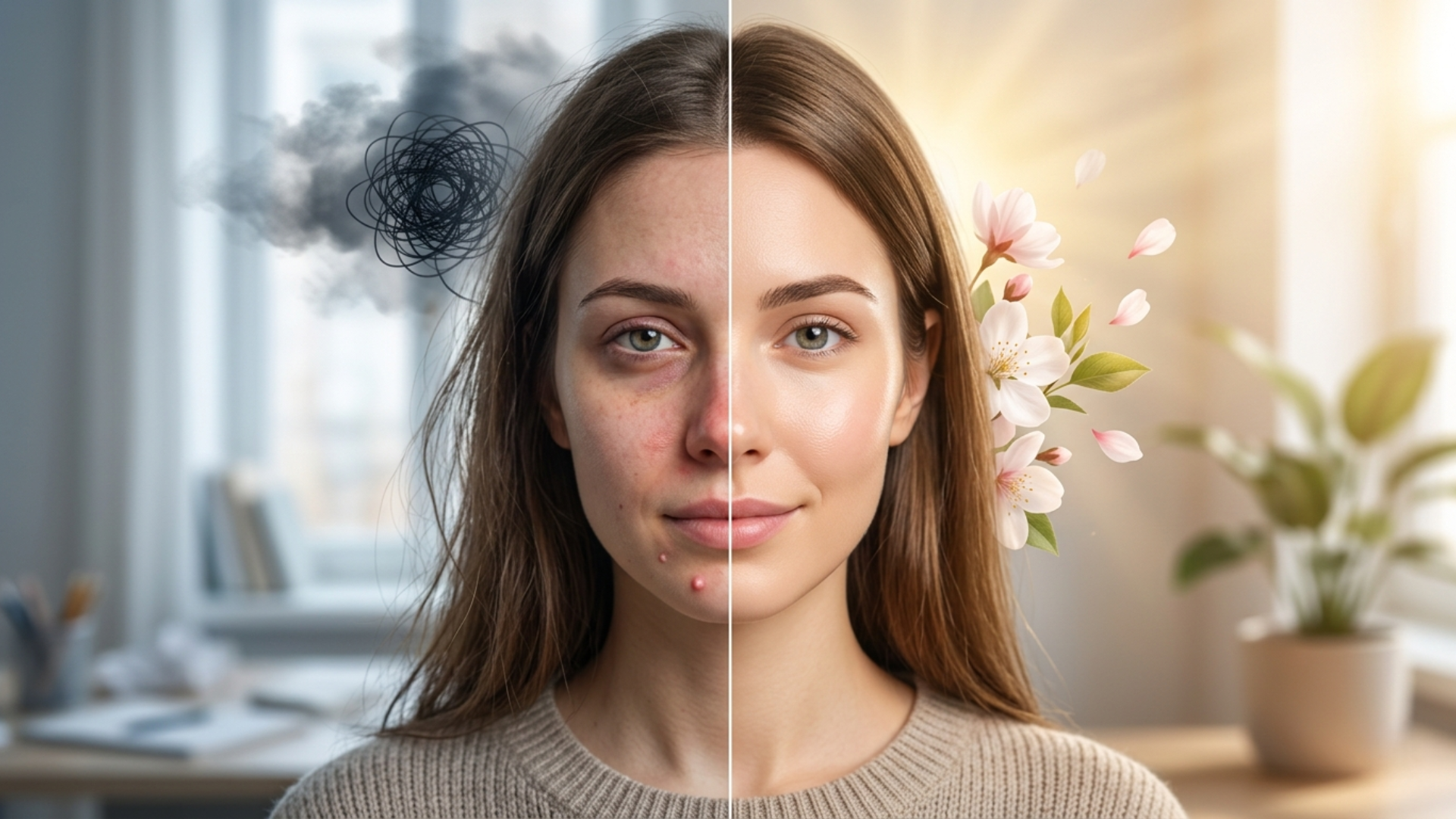
A brief pause may make a stressful moment more manageable. It will not reliably switch off stress in two minutes, and it is not treatment for an anxiety disorder. Choose a comfortable option below; no immediate improvement does not mean you did it wrong.
1. Breathe comfortably
Let your breathing slow gently without forcing depth or holding your breath. Count if it helps you focus. Stop if you feel dizzy or distressed. The earlier claim that a fixed 4-7-8 pattern forces the heart rate down has been removed.
2. Notice your surroundings
Name a few things you can see, hear or feel. You can keep your eyes open and skip any sense that feels uncomfortable. Grounding gives attention a concrete task; it does not guarantee that anxious thoughts disappear.
3. Change position
If safe, stand up or move to a quieter place. If you cannot leave, adjust your seat or relax your grip. Do not practice distracting techniques while driving or operating equipment.
4. Release comfortable muscle tension
Unclench your jaw and lower your shoulders gently. Avoid strong neck stretches or squeezing painful muscles. Stop if a movement causes pain. Relaxation is optional, not a physical test to pass.
5. Write one next step
Write the concern, then one action within your control. For example: “I cannot finish everything tonight; I will ask which task is urgent.” A notebook cannot make a worry vanish, but it can help separate a problem from the next decision.
6. Reduce one interruption
Silence a nonessential notification or close one distracting tab. Keep alerts you need for safety or caring responsibilities. A small boundary may be more useful than expecting yourself to ignore every demand.
7. Reach out
Tell someone you trust that you are having a difficult moment, or ask for practical help. You do not need to wait until stress feels severe. If talking is difficult, write a short message you can send when ready.
Claims removed from this guide
Cold water on wrists, humming, the color green and drinking water were previously described as instant cortisol or vagus-nerve fixes. This article does not establish those effects. Stay hydrated for ordinary health needs, but do not use water or cold exposure as treatment for unexplained symptoms.
When a pause is not enough
Seek professional support when stress affects daily life or self-help is not helping. New chest pain, fainting or severe breathing difficulty needs urgent medical assessment rather than being assumed to be stress. If you feel unable to stay safe, contact local emergency or crisis services.
Source
Written by KGlow Writer. I am not a dermatologist or medical professional. This article is for general education and does not replace individualized care. Last reviewed: October 9, 2026.